Mad Poet of the Year - Ray Greenblatt (October 2021)

The Mad Poet of the Year blog posts share the poetry of a long-time Mad Poet. This year-long appointment provides readers with a deep dive of the writer’s work and thoughts on poetry. We are thrilled to have Ray Greenblatt serve as the inaugural Mad Poet of the Year for 2021.


THE GAME OF PATIENCE

 by Ray Greenblatt

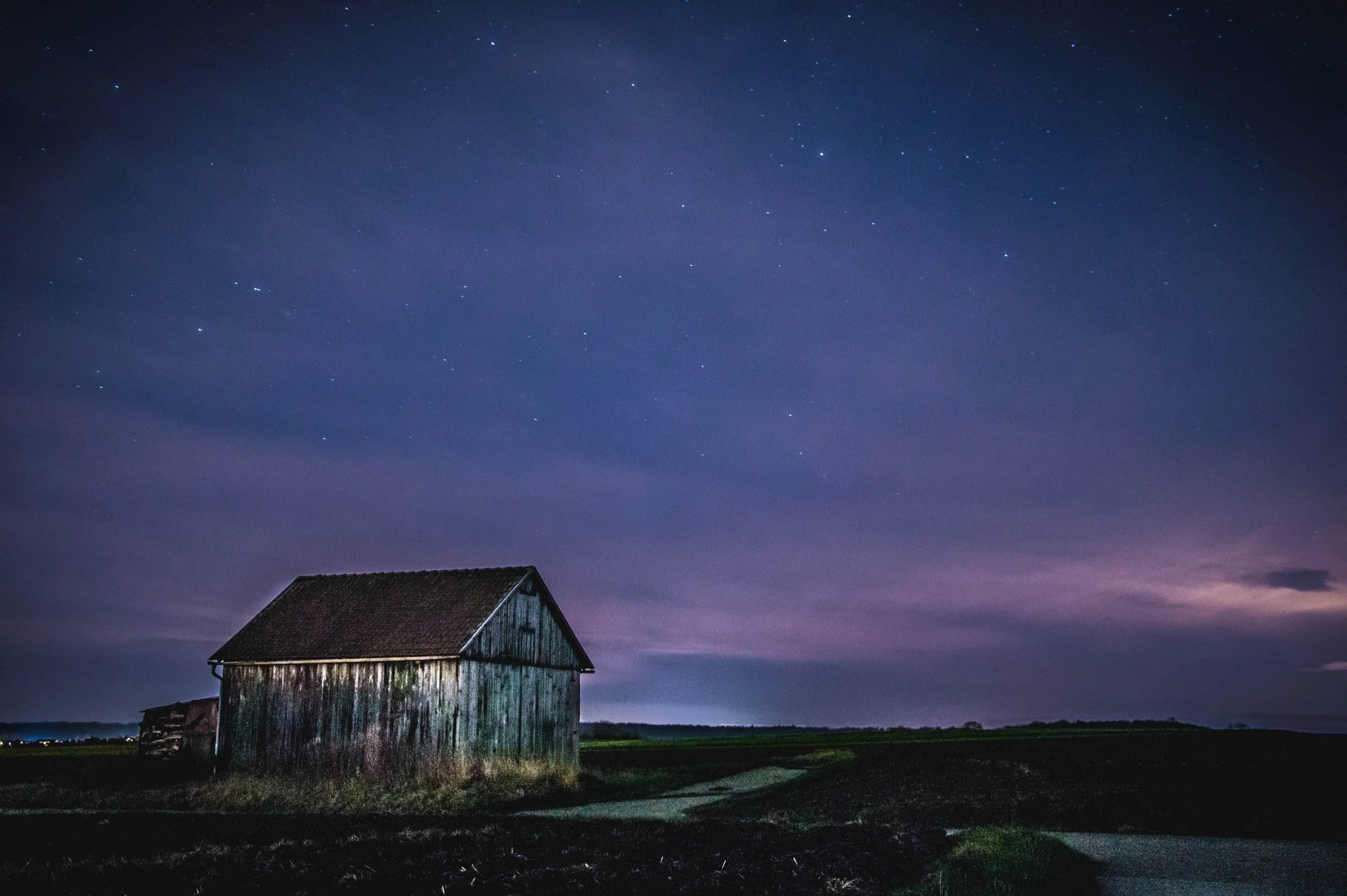
Funny, I met him at a barn dance
didn’t  say much
          slit always-darting dark eyes
          soft brown eyes

did say he wanted to be with people
who sank their roots deep
         he moved well
         especially graceful hands
I knew then that he used guns.

I used to be a hairdresser in a salon
now I tend only to my own hair
put it up in fantastic folderols
          let it down like leaves
          like feathers
          mist from a waterfall,
I had all the children I wanted
when I had a school house,
I taught dancing too in a dance hall
          now I whirl around the kitchen
          in the arms of an invisible man
          dust rising to outline his shape.

When he is relaxed in my bed at dawn
          is my greatest happiness
his mustache
          a vole twitching in my palm
his body firm and smooth
chest hair in shape  of a cross
          hard-calloused hands
          hard-calloused buttocks
his voice low whisper like wind,
when a woman loves a man
          --rare thing at that—
makes no difference what
          he does to get by.

Garden patch out back
goat in the field
some Rhode Island Reds in a shed
          tumbleweeds roll by
          cottonwood limbs creak
crow’s morning alarm
owl’s night warning
          down the lane my mailbox
          beside it a sign: Etta’s Place
a letter is more holy
          than the print in Scripture
I am the Red Queen learning to wait,
I mumble the chant
without being aware:
          I listen to the Moon Sing
          I watch the Sun Dance.


Paul Newman and Robert Redford are major actors in the history of American cinema. Their roles as Butch Cassidy and the Sundance Kid especially endeared them to us. But I’ve been fascinated by the Kid’s girlfriend, Etta Place. Not many facts are known about this real person; the rest is hearsay. I wanted to create a back-story that gives dimensionality to this mysterious woman.


Ray Greenblatt has been a poet for forty years and an English teacher longer than that. He was an editor of General Eclectic, a board member of the Philadelphia Writers Conference, and is presently on the staff of the Schuylkill Valley Journal. He has won the Full Moon Poetry Contest, the Mad Poets Annual Contest, and twice won the Anthony Byrne Annual Contest for Irish Poetry sponsored by The Irish Edition. His poetry has been translated into Gaelic, Polish, Greek and Japanese.

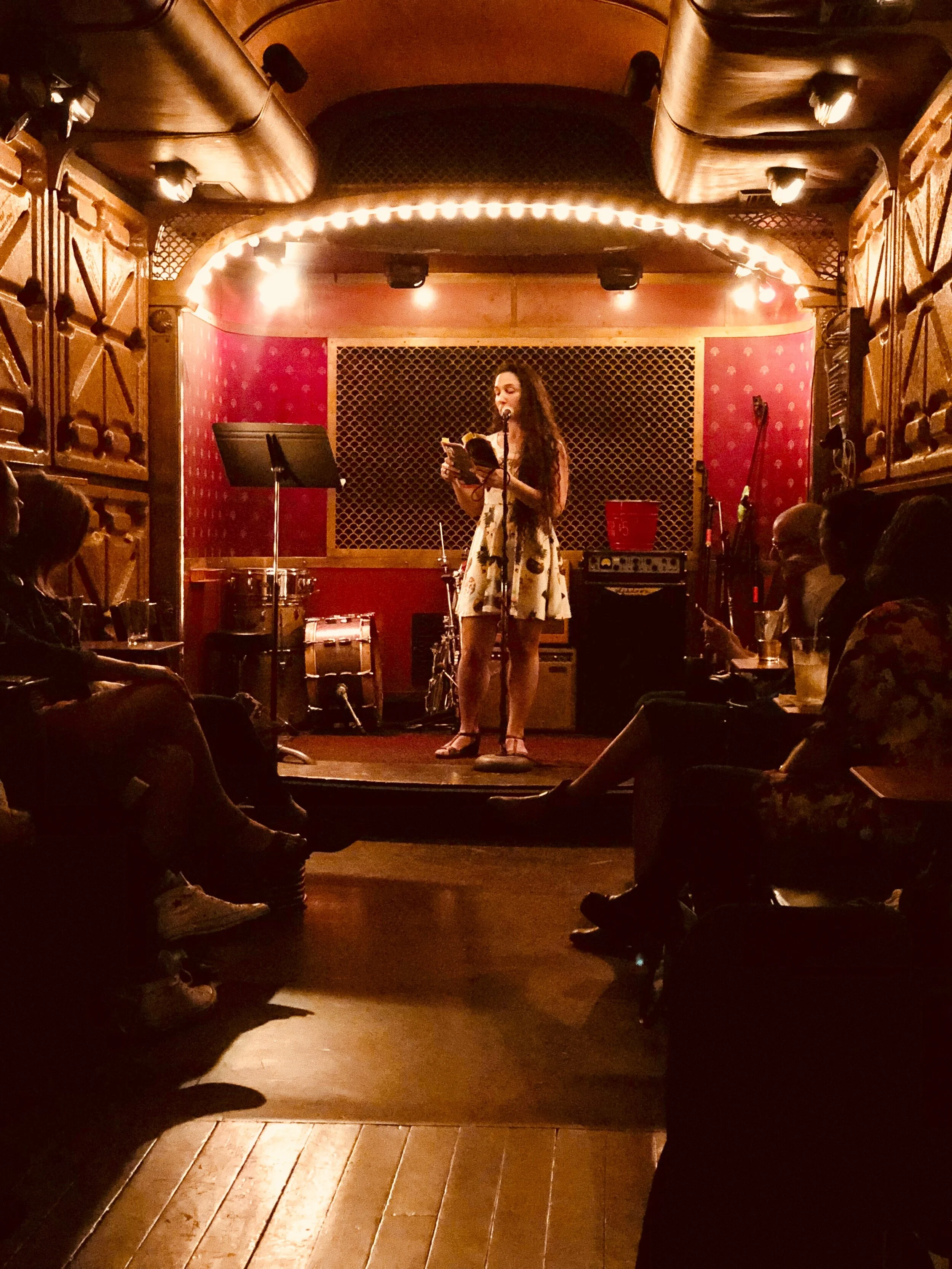
Local Lyrics - Featuring Emari DiGiorgio

Mercy & Dolores
by Emari DiGiorgio

Let me tell you about my tits
who I named just for this poem.

They’ve been called small many times–
mostly by men, who must’ve earned
this authority in naming breasts

from fathers or well-meaning mothers
who let their sons think they were the first mouths to gum those nipples. Yes,

it is common practice to name a gift:
a stuffed bear, a toy boat Santa’s sent,
but I wasn’t nursing those Dorito-stained

lips, wasn’t some after-school shake
to be sipped on the bus ride home
when Dan god-my-judge Rollins leaned over

the seat and said the only twin peaks
I see around here ain’t very steep
.
Instead of ignoring him, I wish I’d said

these little bitches are black diamonds; no
I wish I didn’t feel that avalanche of hurt
in the valley between my breasts, wish

I didn’t wish them bigger. This boy,
whom I’d defended when others shamed
his father’s drunken bouts, would trade

my kindness to be part of this alliance
of boys and men telling me I’m less
because of the size of my breasts.

I want to make them mine, instead
of training them to be an image
of what I thought they must be: buds praised

with sunshine and water until they bloomed
full magnolias, petal-soft, leaking sweetness.
These handfuls are enough and not yours.

I’m taking them back from the still August air
of that windowless bedroom, from the man
who’d worry my nipple until it grew

dull to touch because he said as a boy
he stroked the mole on his mother’s neck
to put himself to sleep. Yes, I let him

use my nipple as a pacifier
because I didn’t know these tits were mine.
Neither did my female colleague at the job talk

who said just put your pretty little tits on the podium
and read
nor the busty clerk who recommended
the ultra-padded Very Sexy Push-Up Bra.

I’m taking them back from every human
who’d stop and stare, who’d toss a penny
into the well between my milk-swollen

breasts with a wish to kiss or bury their face
and every radical sorrow in them.
My blessed-to-be-maternal-rivers-of-milk

and my-daughter-at-their-banks breasts.
My nipples-glittering-like-copper-coins

no-one-can-make-me-spend breasts:
twin sisters, mercy and pain.

 
DSC_6554-2.jpg

How do you begin a poem? What is your process when presented with that all possible blank page?
Sometimes a phrase or line guides me. It might be something I overheard or read, and it haunts me like an earworm. Other times, I have an idea or feeling but no language to accompany it yet. In both cases, I often “announce” the line or the idea and permit myself to freewrite by hand in a journal or to literally talk about and through it as an audio-draft recorded as a voice memo in my phone. I have a bad habit of self-censoring, even responding to your interview questions; I revise and edit before permitting myself to move forward. My analytical self is loud-mouthed and confident. I have to silence her for my creative self to emerge. If I don’t start on a computer screen, I can undermine the perfectionist and play on the page or in the air. That’s where my best writing comes from, when I don’t know what I’m doing or how to control it.

Your work succeeds in exploring connections between personal and political without coming off dogmatic. What is your strategy for this tightrope walk?
For me, I don’t think it’s possible to write about the political without exploring my personal connection. If a writer explores some concept or historical moment as “other,” they’ve missed a real opportunity for discovery on the page and in their life, and those poems likely risk appropriation or objectification. I have to uncover why I want to write about a particular topic or moment in time, how am I part of this story/tradition/tragedy. That complicity is crucial in my mind and work, as a human and as a writer. These questions are not easily answered, especially when writing about histories of oppression and privilege, so I trust that the language and music of a poem will help me.

In addition to a poet, you are a yoga practitioner and teacher. Do you find there are connections between practicing poetry and practicing yoga?
When we talk about yoga, we often focus on the physical practice, the asanas, but yoga is much more complex. Patanjali’s Yoga Sutras offers an eight-limbed guide to live with purpose and meaning, to acknowledge our connection with others and the natural and spiritual world. In that sense, I believe there’s a kinship between the practice and study of poetry and yoga. Both require deep listening and attention.

You recently became the director of Murphy Writing of Stockton University and host World Above: Open Mic & Featured Reading at the Noyes Arts Garage in Atlantic City. What are your goals when curating a space for writers? How does being enmeshed in a literary life effect your writing?
Whenever I’m curating a space for writers, whether it’s a community workshop or open mic or a more formal course at the University, my primary goal is to create a safe, inclusive space for participants to help them see themselves as writers and part of a writing community. This was vital to my own growth as a young poet, and I was so fortunate to be invited to attend Murphy Writing’s flagship program The Winter Poetry and Prose Getaway when I was nineteen. I firmly believe that the arts, whether literature, music, dance, sculpture, affirm our individual experience and connect us with each other, even when we come from very different backgrounds. There are poets among us everywhere–bagging groceries at Acme, teaching elementary subtraction, running the electric in a new home. I am grateful to provide opportunities for these lovers of language to gather, create, and share their work; and I am bolstered by these events, reminded #whypoetrymatters when so much of the world is cracked and broken.

What is your method when it comes to editing and revising your poems?
Because my initial drafting process produces unstructured prose, I will often experiment with formal constraints to help me revise. This might mean I rewrite the poem in a traditional form, such as a sestina or villanelle, or I might give myself some rules­, such as couplets with seven-syllable lines. Then, I adhere to or abandon the form/rules I created in subsequent drafts. The use of form helps me overcome my narrative tendencies and experiment with sound and image. Ironically, formal structures help me play more in a poem.

Where can readers find more of your work? Buy your books?
You can find my books, sample poems, and interviews on my website: https://www.emaridigiorgio.com/. Check out my feature on NJ’s State of the Arts, too.


IMG_5639.JPG

Emari DiGiorgio is the author of Girl Torpedo, winner of the Numinous Orison, Luminous Origin Literary Award, and The Things a Body Might Become. Her poetry has received numerous awards, including the Auburn Witness Poetry Prize, RHINO’s Founder’s Prize, and a poetry fellowship from the New Jersey State Council on the Arts. At Stockton, Emari teaches first-year writing and poetry, is the Faculty Director of Murphy Writing, serves as President of the Stockton Federation of Teachers. She is also a Geraldine R. Dodge Foundation Poet and hosts World Above, a monthly reading series in Atlantic City, NJ.


“Catfish” John Wojtowicz grew up working on his family’s azalea and rhododendron nursery in the backwoods of what Ginsberg dubbed “nowhere Zen New Jersey.” Currently, he works as a licensed social worker and adjunct professor. He has been featured in the Philadelphia based Moonstone Poetry series, West-Chester based Livin’ on Luck, Mad Poets Society, and Rowan University’s Writer’s Roundtable on 89.7 WGLS-FM. Find out more at: www.catfishjohnpoetry.com.


Profession: Poet

Profession: Poet is a new monthly blog feature exploring craft and identity in poetry by Hanoch Guy, who writes poems in both English and Hebrew.


Writing Poetry of Fantasy and Dreams


 You may want to go back and read the previous blog, as it will offer connections with this one.

This post will offer you prompts and methods to stimulate your imagination for creating new poems.

Set aside a quiet hour during a time you won’t be interrupted.

Get together a drawing pad or pieces of paper, crayons, markers, and inspiring music.

Consider Fantasia, the movie, to get your creative juices going, or another movie you can bring to mind that has a fantastical storyline and a magical landscape.

Look at surrealist paintings from artists such as Magritte, Klee, Dali, Leonora Carrington, Remedios Varo, and others who create imaginative, dreamlike worlds.

Have your drawing pad or paper ready.

These writing exercises may help you to break out of the style of poetry you usually write. 

They provide an opportunity to concentrate on fantasy and dreams and use that imagery, terrain, and sensation in your poetry.

Remembering the last blog about the limbic brain, which houses the language of poetry, below are some prompts to start with.

  • Focus on the following phrases and write what comes to you with each one:

    • Wonder

    • No common sense/no logic

    • Put aside the judge (your left brain)

    • Mix up time and space

    • Omit lines and words

    • Surrealism

    • Daydreams

    • Imagination

    • Symbolism

    • Synesthesia (blending senses)

    • Non sequiturs

    • Incongruence

  • Here are some other methods to consider to open up your imagination and limbic brain.

    • Read a foreign language poem aloud.

    • Think about distant lands.

    • Experiment with signs and symbols such as flags, banners, and runes.

In order to understand more , I suggest looking at the poetry of the great Indian poet, Kabir, especially his hilarious upside-down poems. Here is an excerpt from one:

The cow is sucking at the calf’s teat,
from house to house the prey hunts,
the hunter hides.

. . .
frog and snake lie down together,
a cat gives birth to a dog, . . .

You may also enjoy this excerpt from e.e. cummings:

in the middle of a room
stands a suicide
sniffing a Paper rose
smiling to a self

I would like to offer you  a poem of mine where I used some of the above devices. This poem was published in Springtime in Moldova, by Kelsay books.

The house on Mill’s corner stretches its walls, yawns,
slides on mud to the creek.
The basement trades places with the attic.
Kids’ beds hang upside down.
They travel to Israel in their sleep.
The wind puts a French sign on 259 rue Ashbourne door.
Hydrangea in the front switches
with the azalea in the back.
The deck is stuck to the side wall.
Burglars get confused and surrender.
The owner is cited by the township
for numerous infractions.

In closing, I leave you with the following prompts and bid you creativity, play, and inspiration.

  • A pink elephant------------------------------------------------------------------------------

  • ------------------------------------------------in the black river

  • Purple wooden bird------------------------------------------------------------

  • A star split--------------------------------------------------------------------

  • Yes and no--------------------------------------------------------------

  • -----------------------------------powerful blow-------------------------------

  • Red mud covers----------------------------------------------------------------

  • Sad painting-------------------------

  • No seams---------------------------------------------------------------------------------------------------------

  •  -----------------------sliding trees

  • A sad gorilla  ----------------------------------------------------

  • Heart and lungs----------------------------------

  • Why because------------------------------------------

  • Icy fire------------------------------------------------------------------------------------------------------------------

  • Write a 4-6 line poem.

  • You may use the prompts.

  • Borrow any line from the poems we read above.

  • Mix  up lines without thinking.

  • Or use guided visualization as a spring board :

    • Close your eyes and imagine yourself on a mountainous road

    • The wind blows hard

    • Horses fly

    • Elephants dance

    • A pink crayon draws  giant purple clown hats

I always welcome your questions and  feedback.


Hanoch Guy Ph.D, Ed.D spent his childhood and youth in Israel. He is a bilingual poet in Hebrew and English. Hanoch has taught Jewish Hebrew literature at Temple University and poetry and mentoring at the Muse House Center. He won awards in the Mad Poets Society, Phila Poets, Poetry Super Highway and first prize in the Better than Starbucks haiku contest. His book, Terra Treblinka, is a finalist in the North Book Contest. Hanoch published poems in England, Wales, Israel, the U.S., and Greece. He is the author of nine poetry collections in English and one Hebrew book.

Mad Poet of the Year - Ray Greenblatt (September 2021)

The Mad Poet of the Year blog posts share the poetry of a long-time Mad Poet. This year-long appointment provides readers with a deep dive of the writer’s work and thoughts on poetry. We are thrilled to have Ray Greenblatt serve as the inaugural Mad Poet of the Year for 2021.


unsplash-image-fP44mZBa2zQ.jpg
 

ROBINSON CRUSOE LIVED THERE

 by Ray Greenblatt

At first he was stimulated by his nakedness. He ached for mirrors. After some time he wore his skin as a suit to filter the sun . . .

Sometimes he would sing and dance. Observers might think him crazy. They never did . . .

Wind was his friend cooling him, making shadows slide and shimmy. He would translate what the wind said . . .

He studied the minutest things. On the beach a tiny sand crab appeared out of a hole. Then he reentered his tunnel pulling it after him and disappeared. Ants in a spaced row carrying leaves like coolies to build a thatched hut. Birds with brilliant plumage forever flitting. They all held magic . . .

Every day he exercised his memory. Scraped up every speck and smudge of the past. For the future each word, letter, diary, tome would have to be stored on a specific shelf in his brain . . .

We all need gods. He shaped his god in the form of a ship. What if his savior arrived. Grew larger and larger on the horizon. Would he be awed or terrified . . .

At night he would float on his isle in the sea, on his own planet among the stars.


The fictional Robinson Crusoe lived on a desert island for 28 years. The real castaway—Alexander Selkirk—upon whom Daniel Defoe’s novel  (considered by some critics to be the first English novel, 1719) is based lived there for 4 years—long enough! However the length of time, what would you do? I wanted to get inside a stranded person’s head and imagine. This piece turned out to be a prose-poem, because there is such  a strong narrative line running through it.


Ray Greenblatt has been a poet for forty years and an English teacher longer than that. He was an editor of General Eclectic, a board member of the Philadelphia Writers Conference, and is presently on the staff of the Schuylkill Valley Journal. He has won the Full Moon Poetry Contest, the Mad Poets Annual Contest, and twice won the Anthony Byrne Annual Contest for Irish Poetry sponsored by The Irish Edition. His poetry has been translated into Gaelic, Polish, Greek and Japanese.
Review of Alla Vilnyanskaya's Void

Review of Alla Vilnyanskaya's Void

Void

Thirty West Publishing House

$14.99

You can purchase a copy here.

Reviewed by Abbey J. Porter


Definitions of “void” include “the quality or state of being without something”; “a feeling of want or hollowness;” and, for the verb form, “nullify, annul.” It’s possible that poet Alla Vilnyanskaya had all these definitions in mind with the title of her recent book, Void.

The debut collection of the Ukranian-American Vilnyanskaya, Void tackles sobering themes, from conflicted relationships and violence against women to the fragility of life itself. Vilnyanskaya is unsentimental in her presentation; indeed, one perceives from her a sort of distance, a detachment. Yet her poems can stir and disturb, fascinate and haunt.

I’ll admit to finding Vilnyanskaya’s poems challenging. They take unexpected twists and turns, sometimes achieving a stream-of-consciousness quality. As a reader, one has the sense of peering through a hazy window; you have to work to untangle many of the poems’ intended meanings. But what’s clear are the poet’s intellect and wit, which shine through her work’s complex layers.

Vilnyanskaya announces the gravity of her content with her opening poem, “#2666,” which describes, in part, a woman’s murder and sodomy. “A numb sensation takes over/Nothing at the bottom of evil,” she concludes. The poem’s title adds to the sense that the murdered woman is an anonymous one among many.

The opening poem also introduces one of the book’s themes: the treatment of women. Rape is a recurring topic. In the prose poem “Pink,” Vilnyanskaya says,

I said no and it sounded like “Yes. Yes. Yes. Please take me, right
here. In fact, I would prefer it if we didn’t wear any clothing.” There
is a certain way that after a rape the sound of a woman’s voice
changes. She becomes an angel.

But some of the aggression toward women described in this collection is more subtle. The prose poem “Tennis Ball” includes the lines, “I was locked in a basement and forced to take the blame/for isolating myself. Women’s emotions are fraudulent.” Here, Vilnyanskaya suggests that women are made to internalize guilt for wrongs committed against them, and that their feelings—perhaps their objections—are invalid.

These various offenses against women are committed amid a troubled landscape, in which relationships are fraught. “Anniversary Gift” begins with “It’s like he is happy for me/He just loves me” and changes course, until he is “Sleeping alone/next to some new girl.” The poem concludes:

You shouldn’t have said five years.
You should have said tomorrow, or fifty.
Try saying tomorrow.

These lines seem to speak to the ultimate fragility and untrustworthiness of romantic partnerships. In “Cinderella: Master Class, Practicing on the Violin,” this fragility is echoed everywhere:

It takes special skill
to discern
that almost anything
may be ruined.

Indeed, in the world Vilnyanskaya describes, life itself is exceedingly fragile. She gives a nod to the effort required to sustain anything alive in “Homerun”:

I’ve always hated
plastic flowers,
but as I grow older
I realize that one
does not always
have the time
or patience
to sustain
a living thing

One of Vilnyanskaya’s skills is showing us just a glimpse of something and managing to imbue that glimpse with inordinate power and story. Perhaps the best example of this minimalism comes in the four-line poem “Encounter,” one of my favorites of the collection:

A boy bounces
a tennis ball in the street
he sees a car
turning

It took a few readings of this understated poem for it to reach its full impact, perhaps because it leaves so much for me, as the reader, to fill in. But once that happened and the poem sank in, it produced a haunting effect. I feel caught in the moment with the boy, poised on the edge of disaster.

This poem provides but one example of Vilnyanskaya’s sometimes-unsettling prowess. Anyone looking for a complex work that explores gender violence, the mutability of relationships and life, and much more might do well to enter Void.

This 96-page book ends with several pages of poems by Anastasia Afanas’eva in translation from Russian.

Abbey J. Porter writes poetry and memoir about people, relationships, and life struggles. She holds an MFA in creative writing from Queens University of Charlotte, an MA in liberal studies from Villanova University, and a BA in English from Gettysburg College. Abbey works in communications and lives in Cheltenham, Pa., with her two dogs.

Source: http://madpoetssociety.com/blog

Profession: Poet

Profession: Poet is a new monthly blog feature exploring craft and identity in poetry by Hanoch Guy, who writes poems in both English and Hebrew.


The Wings of Fantasy Brain


Before we delve into the fantastic right hemisphere, let’s explore the left hemisphere a little more. You have to decide how structured you want your poems to be. You can choose a very strict format or no format at all.

We consider again that the capacities that are offered in the list below are metaphors and brain activities are migrating and may be present in different areas of the brain. The faculties of each brain are not exclusive to that particular brain. According to researchers, reading poetry stimulates the right hemisphere.

The Julian Jaynes Society views poetry as right hemispheric language.

Among the many aptitudes of the right brain are:

Creativity

  • Imagination & fantasy

  • Intuition

  • Holistic thinking

  • Art & color

  • Visualization

  • Drawing

  • Rhythm

  • Memory 

  • Daydreaming 

  • Emotions

  • Spatial intelligence

  • Exploration

  • Pretense

  • Association

  • Figurative devices such as metaphor, image, simile, and symbol

This list is partially based on The Human Memory website.

Below are a few prompts you can play with:

I imagine…..

My dog is….

Sea colors are….

Earthworms remind me of…

Morning feelings are…..

My daydreams…

You turn right and left, and you get…

I like to draw…

You can also review your poems and become familiar with ones that uses a great deal of right hemisphere devices.

The next blog will offer ways to write poetry of fantasy and dreams.


Hanoch Guy Ph.D, Ed.D spent his childhood and youth in Israel. He is a bilingual poet in Hebrew and English. Hanoch has taught Jewish Hebrew literature at Temple University and poetry and mentoring at the Muse House Center. He won awards in the Mad Poets Society, Phila Poets, Poetry Super Highway and first prize in the Better than Starbucks haiku contest. His book, Terra Treblinka, is a finalist in the North Book Contest. Hanoch published poems in England, Wales, Israel, the U.S., and Greece. He is the author of nine poetry collections in English and one Hebrew book.

Mad Poet of the Year - Ray Greenblatt (August 2021)

The Mad Poet of the Year blog posts share the poetry of a long-time Mad Poet. This year-long appointment provides readers with a deep dive of the writer’s work and thoughts on poetry. We are thrilled to have Ray Greenblatt serve as the inaugural Mad Poet of the Year for 2021.


unsplash-image-MrxlMcZxqhY.jpg
 

THE ICEHOUSE FIRE

 by Ray Greenblatt

The entire neighborhood came out
          infants in diapers and carriages
          aged on canes wrapped in mothy blankets
          gambling men rolling craps in their heads
          churchgoing women sending up puffs
                    of gray hope into sodden air
the crowd turned upward dark pools of eyes
          waiting for the queen
          mother ship to land
          challenger to be ko’d by the old champ

somehow in that burning building
          was his father’s chronic fury
          oldest sister’s terror vented
                    in the backseat of cars
          fists and chipped teeth of the Poplar Street gang
something of the power of trains
which rumbled roared behind their row-house
smashing through serenity
slicing through sensitivity
          hid also in the blaze
a cool moon would no longer satisfy

night was crisp with cold
          crisp with heat
elemental combustion
          fire vs water
          while air watched from above
          earth from below
                    rain from fire hoses
                    fell into the building’s maw
                    and was absorbed
now the crowd began to focus
on the abandoned icehouse roof sign
          beginning to list

as if tantalizing the inferno
leaning down to tweak it
          but it was too big for its britches
snaky arms reached up
to curl flaming chains around it
and slowly
          letter
                    by letter
the sign heaved and sank

was the gasp—or—sigh from sign or human
at that the total body
          of people grew cold
lost interest
saved by firemen’s hoses
they turned toward home
          as a smoky wet dawn emerged
          a lingering stink of loss
                    of what they were not sure
          to last for weeks or longer.


Yes, I did have relatives in West Philly. There were gangs and we watched trains passing nearby. Yes, the vacant icehouse did catch fire one street over and did threaten my cousins’ block. But there the reality ends and the characterization takes wing.


Ray Greenblatt has been a poet for forty years and an English teacher longer than that. He was an editor of General Eclectic, a board member of the Philadelphia Writers Conference, and is presently on the staff of the Schuylkill Valley Journal. He has won the Full Moon Poetry Contest, the Mad Poets Annual Contest, and twice won the Anthony Byrne Annual Contest for Irish Poetry sponsored by The Irish Edition. His poetry has been translated into Gaelic, Polish, Greek and Japanese.

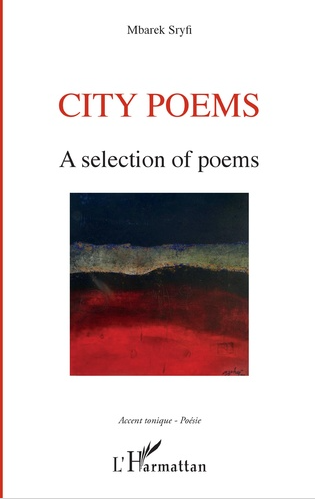
Review of City Poems: A Selection of Poems by Mbarek Sryfi

July 21, 2021

city poems.PNG

City Poems: A Selection of Poems

L’Harmattan

$14.17

You can purchase a copy here.

Reviewed by Sean Hanrahan


Mbarek Sryfi’s collection, City Poems: A Selection of Poems, illustrates the speaker’s intense, almost visceral, connection with humanity. Whether the poet is observing classes of people that society generally ignores or a tender moment between a loving elderly couple, Sryfi crystallizes moments in sparse, yet eloquent, lines. This is the work of an insightful sage who takes the time to observe the world around him. This book is divided into two sections: The Trace of a Smile, originally published as a chapbook by Moonstone Publishing, and City Poems.

In perhaps one of his most memorable tercets, “The Autistic Child,” Sryfi writes, “He stood there gazing/His tongue helpless/But words dripping from his eyes.” In this short, haunting poem, Sryfi poetically gives voice to a voiceless boy. Since this poem is located in the City Poems section, I wondered whether this was an observation from a stroll around the unspecified city, perhaps a city in Morocco.

He also has a poem titled, “The Flâneur” (French for stroller or idler), where he observes, “The yearning body in blue/trying to steer clear of the blueness of the cloth in vows of chastity.” Blue is a color especially prevalent in Morocco, and the reader can picture the poet walking past a woman in a hijab. This moment could occur in any city, such as Paris or Philadelphia. Sryfi’s city becomes a place built by finely wrought moments and connection to or isolation from humanity.

A moment that illustrates Sryfi’s empathy and enviable ability to encapsulate a specific moment occurs in “Witnessing a Senior Moment at a Diner.” These supple, dreamlike lines begin this poem (my favorite in the book),

like a firefly, on borrowed time,
towards the light, he drifted away
seated on the chair across from her
she can’t take her eyes off him
for fear he’ll never come back

This moment touchingly captures a moment between a wife patiently waiting for her senile husband to return to her and their shared present. Sryfi goes on to make the astute observation that “love is life affirming/she refuses to see him/leave, never to return.”

Realizing that the world is not just about connection, but also about its opposite— isolation, Sryfi pens the poem, “Café La Estrella,” about a man alone with his cell phone in a “café coming alive.” He writes “I might forget my phone/Here.” He leaves to go to a train station, perhaps to return to friends or family, and realizes he did in fact leave his cell phone. He had previously observed “The wide street was empty/Swarming with drunks and whores swaying in different/directions.” He comes to the realization that life too can be an wide, empty street, and he takes “pity on the drinks and whores, and on myself/“How lonely I am/Without my phone.”

Sryfi also turns his observation eye upon himself in the lovely final poem in this superb collection, ”Just Hanging On Waiting for Things to Happen.”

I flumped into my chair
Yeats’ Collected Poems opened on
Sailing to Byzantium
It was still dark outside
It took me by surprise when I
Suddenly caught a glimpse of myself outside

The poem takes place at 5 A.M. where he is alone with Yeats and his thoughts. With precise language, he takes the reader to that “dead silent” time where one recalls “long forgotten moments.” The time when you use music, perhaps Mahler’s Ninth Symphony, to fill up that silence. The time where one, drowsy, feels inside and outside of themselves at the same time. A beautiful endpoint to this book that celebrates life, yet finds time to explore its heartbreaking melancholy as well. Time with this book and Sryfi’s enriched, evocative language is time that is well spent.


Sean Hanrahan is a Philadelphian poet originally hailing from Dale City, Virginia. He is the author of the full-length collection Safer Behind Popcorn (read review here) (2019 Cajun Mutt Press) and the chapbooks Hardened Eyes on the Scan (2018 Moonstone Press) and Gay Cake (2020 Toho). He is currently at work on several literary projects as well as teaching a chapbook class. He currently serves on the Moonstone Press Editorial Board, is head poetry editor for Toho, and is workshop instructor for Green Street Poetry.

Local Lyrics - Featuring Brit Marshay

Polarities between self
by Brit Marshay

I’ve been wondering the difference between you and I, the distance between us..

The difference between us is when I see a fallen tree in the middle of my path, it becomes a table for two, a footstool for giant forest dwelling trolls and refuge for frogs to safely sing their evening tune, a home for fairies to roam between the hollow wood and fabric of time.

You see that same tree as rotting rubbish, blocking you from a fragmented finish line desperately seeking a “good job” in the end.

Lately, I’ve been wondering about the distance between you and I..

It has become apparent that the distance between us is aching to be understood.

I come back to that fallen tree deep in the wood behind my ribs and I remember,

I am exactly where I need to be.

 
polarities between self.png

What are your muses? What gets you revved up as an artist?
This is a great question, I often find inspiration in nature, the beauty as well as the destruction. Death, rebirth, the challenges that cycle can bring forward. I am passionate about creative expression. Oftentimes, the idea of clowns and uncomfortable spaces provoke my inspiration as well as painting my face and dancing to avant-pop or anti-music. A few of my favorite artists, The Space Lady and the great Daniel Johnson influence my naivety. I often pull from my own life experiences such as losing my parents at the age of 15, surviving cancer and living and navigating those losses on my own.

Much like the first question, what really brings me to life is pulling deep from the core of painful experience. Bringing forth unspoken emotions and translating that into art, that’s my jam. I love the duality of life. I consider myself a maker and so collaborations of all sorts whether that’s in conversation, singing, dancing, working on a project with others, that really gets me going. I strongly believe we are all artists so what really turns me on to the arts is when it’s accessible to everyone.

Your poems have strong emotional cores and often feature the fantastic. What’s your relationship like with fairies and other woodland creatures?
I have always used escapism to cope with my life, I am a dreamer, it’s in my blood. I found mystic beasts and folklore later on in life and immediately felt connected to the stories and creatures that I’ve welcomed into my world. The thing with fairies is they are tricky little things, they’re quick and mischievous, they can be bribed with treats, and they play on their terms.

Those are qualities of mine that I have also embraced over the years. We can learn a lot about ourselves by diving into other worlds and admiring the mysterious.

In addition to writing poetry, you have a traveling boutique and Etsy shop called City Pixie Shop. Are there similarities between making jewelry and writing poems?
You know, City Pixie Shop is a passion of mine for several different reasons. just like poetry. It’s sort of a reclamation and celebration of my life lived. When I decided to get sober, City Pixie Shop was my way of working through years of neglect, using my hands to create has helped me work through so much mentally. Similar to poetry, when I write, my goal is to express my rawness, to really be in the moment, it’s meant to give hope and shed light on dark places in hopes to influence others to express and honor their pain/creativity.

What is your process like when that all possible blank page is in front of you?
I love this question, my process is a bit scattered when it comes to creation and writing. There isn’t much thinking when I’m in my flow. I find that I write best when I’m full of unprocessed emotion or if I’m pulling from past experience. I write to heal myself.

If I’m feeling romantic, love, genuine connection, or sensual the words seem to flow out onto my page.. when I’m angry, frustrated, full of fire, these are the moments I can go to my blank page and spill my guts.

Where can readers find more of your work? Check out City Pixie Shop?
I would love to start a website and blog this winter to compile the likes of all my creative outlets for City Pixie Shop and my personal writings. For now, you can check out my instagram @Citypixie_shop and my etsy for jewelry. I occasionally post poetry on my personal page @S.oftdust on instagram as well.


brit.png

Brit Marshay is a Philly based artist/maker. She has been creating and writing all her life from making earrings out of paper clips and staples in grade school to now owning and operating an online jewelry store based out of her downtown studio apartment. Mixed media and the power of spoken word have healed her in many ways. Art and free form writing are two of her favorite ways to celebrate creative expression and to honor the life she’s lived.


“Catfish” John Wojtowicz grew up working on his family’s azalea and rhododendron nursery in the backwoods of what Ginsberg dubbed “nowhere Zen New Jersey.” Currently, he works as a licensed social worker and adjunct professor. He has been featured in the Philadelphia based Moonstone Poetry series, West-Chester based Livin’ on Luck, Mad Poets Society, and Rowan University’s Writer’s Roundtable on 89.7 WGLS-FM. Find out more at: www.catfishjohnpoetry.com.


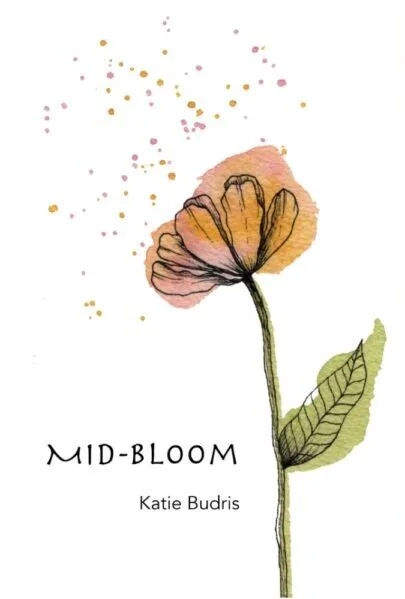
Review of Katie Budris’ Mid-Bloom

Review of Katie Budris’ Mid-Bloom

BUDRIS-KATIE-WEB-600x600.jpg

Mid-Bloom

Finishing Line Press

$14.99

You can purchase a copy here (pre-orders ship August 13, 2021).

Reviewed by Abbey J. Porter


Katie Budris’ recent chapbook, Mid-Bloom, is about survival—survival of the narrator when, as a young teen, she loses her mother to cancer, and survival of the narrator herself when she too faces a cancer diagnosis.

In this 19-poem collection, South Jersey resident Budris explores the shape of loss and change brought about by disease, in part by looking to the natural world.

Budris opens the collection with “5:00pm, Weeknight,” a glimpse of the narrator’s life at 13—presumably, before her mother became ill. In this world, the narrator’s biggest concern is dealing with pre-algebra. Her mother, a piano instructor, taps out time in another room—an unseen but nonetheless comforting presence. Here, we can count on small pleasures and rituals:

Dad will mash the potatoes
just the way I like them, serve dinner on
Mom’s floral china, placemats, oak table, grace.

Budris introduces the frailty of life in “Keeping Things Alive,” in which she describes the plants lining her window ledge—"bamboo shoots, devil’s ivy, an elephant bush,/two cacti, one orange, one yellow.” She details the efforts made to meet the plants’ needs: new pots, different windows. But among the stems and leaves, Budris finds her blue Betta floating dead in his fishbowl—a discovery that shakes her. She scribbles a note for her sleeping partner: I’m afraid all the plants are dying. Her sentiment suggests that the Betta’s death heralds a larger, systemic failure.

In perhaps the most baldly confessional, unabashedly grief-shocked poem of the collection, Budris shares the immediate aftermath of her mother’s death in “The First Morning.” Her voice is frank and vulnerable:

I know it’s almost noon,
but I don’t want to get out of bed.
You are not here…

I’ve never done this
before. Said goodbye
forever.

Nature is a recurring theme in Budris’ poetry. In “How to Survive a Blizzard,” she observes how a family of cardinals reacts to a winter storm:

They know
the best protection from a blizzard
is not to fly, but to burrow, escaping
the elements by surrounding themselves
in a cave to keep warm, wait out the storm.

One feels these lines speak also to the “storm” Budris weathers, and that the birds’ method of sheltering in place applies to her as well.

“Mid-Bloom” is another poem that looks to the natural world. Budris reflects that “My whole adult life, I have failed to keep/ a plant alive beyond a few months.” She goes on to reminisce about planting flowers with her mother when she was a child.

I’m not sure where in the last thirty years I lost
my green thumb. But there
in the backyard, my mother knew
I was capable, nurturing, and strong. As if
she knew I would be on my own
much too young when she left this world
much too soon, a flower mid-bloom

The poet also writes of her own experience with breast cancer, from diagnosis to hair loss. In “If Things Were Otherwise,” this experience brings her closer to her mother as she imagines an alternate reality in which her mother still lives. She contemplates the effects of the disease that she shares with her mother, to whom she has “never felt closer,/connected by cancer.” She concludes, “This time, we’re both cancer patients./This time, I’d understand.” Ironically, the disease that took her mother’s life also binds the two women.

A poem that stands out to me is “Waiting for the Blue Line, Chicago.” Budris describes toeing and leaning out over the colored stripe running along the platform, meant to warn passengers to keep back. 

She wonders whether
she could see the train coming better from down there—
white cyclops barreling
out of the darkness

The narrator balances, literally and figuratively, pulled by an impulse that reminds me of Poe’s “Imp of the Perverse”: “There is no passion in nature so demoniacally impatient, as that of him who, shuddering upon the edge of a precipice, thus meditates a Plunge.” I admire the subtlety and shiver-inducing quality of the poem. In addition, “Waiting” strikes at the heart of the survival issue, asking whether the narrator can withstand the most dangerous force of all—the one that vacillates within her.

These accessible poems share the writer’s pain and hard-won wisdom with a quiet ferocity, and their impact lingers like the scent of a summer bloom.


Abbey J. Porter writes poetry and memoir about people, relationships, and life struggles. She holds an MFA in creative writing from Queens University of Charlotte, an MA in liberal studies from Villanova University, and a BA in English from Gettysburg College. Abbey works in communications and lives in Cheltenham, Pa., with her two dogs.

Source: http://madpoetssociety.com/blog

Profession: Poet

Profession: Poet is a new monthly blog feature exploring craft and identity in poetry by Hanoch Guy, who writes poems in both English and Hebrew.


The “Law and Order” brain


In this blog post, I examine the neocortex/new brain, which is the new kid on the block.

The origin of the neocortex is surprisingly recent, evolutionarily speaking. It dates back to reptiles of the Carboniferous Period, about 359 million years ago. It emerged then as “a uniform, six-layered sheet consisting of radially deployed neurons” in the first small mammals who appeared during the transition of the Triassic and Jurassic periods. (Mental Floss: November 17, 2016. Read this article here.)

The cortex comprises two-thirds of the brain. It sits over and around most of the brain. It is highly developed and responsible for thinking, perceiving, producing and understanding language. The new brain has six thin layers of gray matter, folded like a wig. Familiar with Hercules Poirot and his little gray cells?

The two hemispheres of the neocortex work in concert, so for clarity, I will write about the left hemisphere first.

It should be emphasized that the capacities should be viewed as metaphors, as many actions and capacities are present in the different parts of the brain.

For now, let’s talk about the left hemisphere. 

From a long list of attributes of the left hemisphere’s functions and capabilities, here are a few:

  • Linear

  • Rational

  • Objective

  • Precise

  • Concrete

  • Exact

  • Punctual

  • Sequential

  • Mother language

  • Rules

  • Judge

  • Order

  • Cause and effect

  • Counting

This is quite a list and it is incomplete!

So the main question we can think about is, what do any of the traits on the list have to do with poetry?

Inspiration and spontaneous ideas are part of the writing process, and it can also be beneficial to be aware of how the previously mentioned capacities strengthen planning, organizing, and mapping while editing a poem.

 Take a look at the list and pick some of the left-brain skills you can use more consciously to enhance your poetry.

Sonnets, sestinas, and ghazals require application of a specific order, counting, and sequencing.

Putting together a manuscript is not a haphazard process. You need to evaluate, arrange in order, choose which poems to include according to a theme.

All of this is a call to action using many left-brain capacities.

Can you come up with more examples of the use of left-brain capacities in poetry?

Next month, we will talk about utilizing the magnificent and expansive right hemisphere to enhance our poetry.


Hanoch Guy Ph.D, Ed.D spent his childhood and youth in Israel. He is a bilingual poet in Hebrew and English. Hanoch has taught Jewish Hebrew literature at Temple University and poetry and mentoring at the Muse House Center. He won awards in the Mad Poets Society, Phila Poets, Poetry Super Highway and first prize in the Better than Starbucks haiku contest. His book, Terra Treblinka, is a finalist in the North Book Contest. Hanoch published poems in England, Wales, Israel, the U.S., and Greece. He is the author of nine poetry collections in English and one Hebrew book.

Mad Poet of the Year - Ray Greenblatt (July 2021)

The Mad Poet of the Year blog posts share the poetry of a long-time Mad Poet. This year-long appointment provides readers with a deep dive of the writer’s work and thoughts on poetry. We are thrilled to have Ray Greenblatt serve as the inaugural Mad Poet of the Year for 2021.


unsplash-image-8fqOgrrw9eI.jpg
 

ON THE PARIZSKA

 by Ray Greenblatt

It is close and threatening today,
I feel as if I must push
through the crowds of ectoplasm
in dark robes and cloaks
gold circle on the breast
or high gilt hat perched,
on what is now a fashionable
avenue of upscale stores
once the dirt-rich street of
kosher butchers, bakers, cobblers
a Ghetto surrounded by walls.

          In the Prague cemetery
          moss-draped
          pock-marked
          lightning-split
sometime cedar fused with rock
the gravestones lean
together for balance
huddle for comfort.

When the clock tower tolls the hour
the astrological signs
suggest the future,
through an opened window
one-at-a-time pass
the Disciples looking down
indifferently or
with a scowl prickling beards,
into the town square where throngs
of tourists are lectured in
Czech, French, Chinese
among many others
the babble of the world.

          And I in my high-tech hotel
          in my spacious suite
          of paneled rosewood
bath of Carrara marble
in full weight cannot
hold down history
vitality, the wailing.


A mere eighty years ago, most of Europe looked away as the Nazis attempted to wipe the Jewish people off the face of the earth! Ironically now in recent years all over the continent, certain tourist destinations are fashionable: Jewish synagogues, Jewish cemeteries, Jewish streets or neighborhoods, any piece of Jewish history— now have shiny brass plaques attached. Where was humanity when it was most needed?


Ray Greenblatt has been a poet for forty years and an English teacher longer than that. He was an editor of General Eclectic, a board member of the Philadelphia Writers Conference, and is presently on the staff of the Schuylkill Valley Journal. He has won the Full Moon Poetry Contest, the Mad Poets Annual Contest, and twice won the Anthony Byrne Annual Contest for Irish Poetry sponsored by The Irish Edition. His poetry has been translated into Gaelic, Polish, Greek and Japanese.
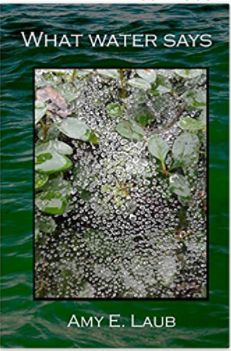
Review of Amy Laub's What Water Says by guest blogger Anthony Palma

what water says.PNG

What Water Says

Parnilis Media

$10.00

You can purchase a copy here.

Reviewed by Anthony Palma


At first glance, Amy Laub's What Water Says is a collection of poems that explores the theme of water, but beneath the surface it is a lot more than that. From the first standalone poem, from which the collection gets its name, we see that this book is a meditation on a lifelong elemental love affair. Laub examines water in all its forms, with each section of the book dedicated to one of its different manifestations. Water comes in the form of a storm, one that a young Laub experiences as the bringer of days off. It comes as a pool enjoyed by young girls that Laub witnesses as an adult. It departs as the casualty of a broken marriage, and then returns as a quiet creek of peace enshrouded by a forest and its trees.

In less able hands, a collection like this would be nostalgic and cliché. However, Laub's deft pen and singular voice make this collection a masterclass in control and craft. Each poem seems to have just enough language to leave us intrigued yet satisfied. We are shown what things and emotions are there, and we are left to fill our heads with the wonders of what Laub delicately presents to us. This book may be about the relationship between the author and water, but I am thoroughly in love with this book.


20200902_073011.jpg

Anthony Palma’s work attempts to bridge the gap between poetry and other forms while addressing issues of social justice, identity, and existence. His work has appeared in publications such as Rue Scribe, Oddball Magazine, and the Show Us Your Papers Anthology. His debut collection of poetry, flashes of light from the deep (Parnilis Media), is now available on Amazon. Be sure to look him up on social media at anthonypalmapoetry.

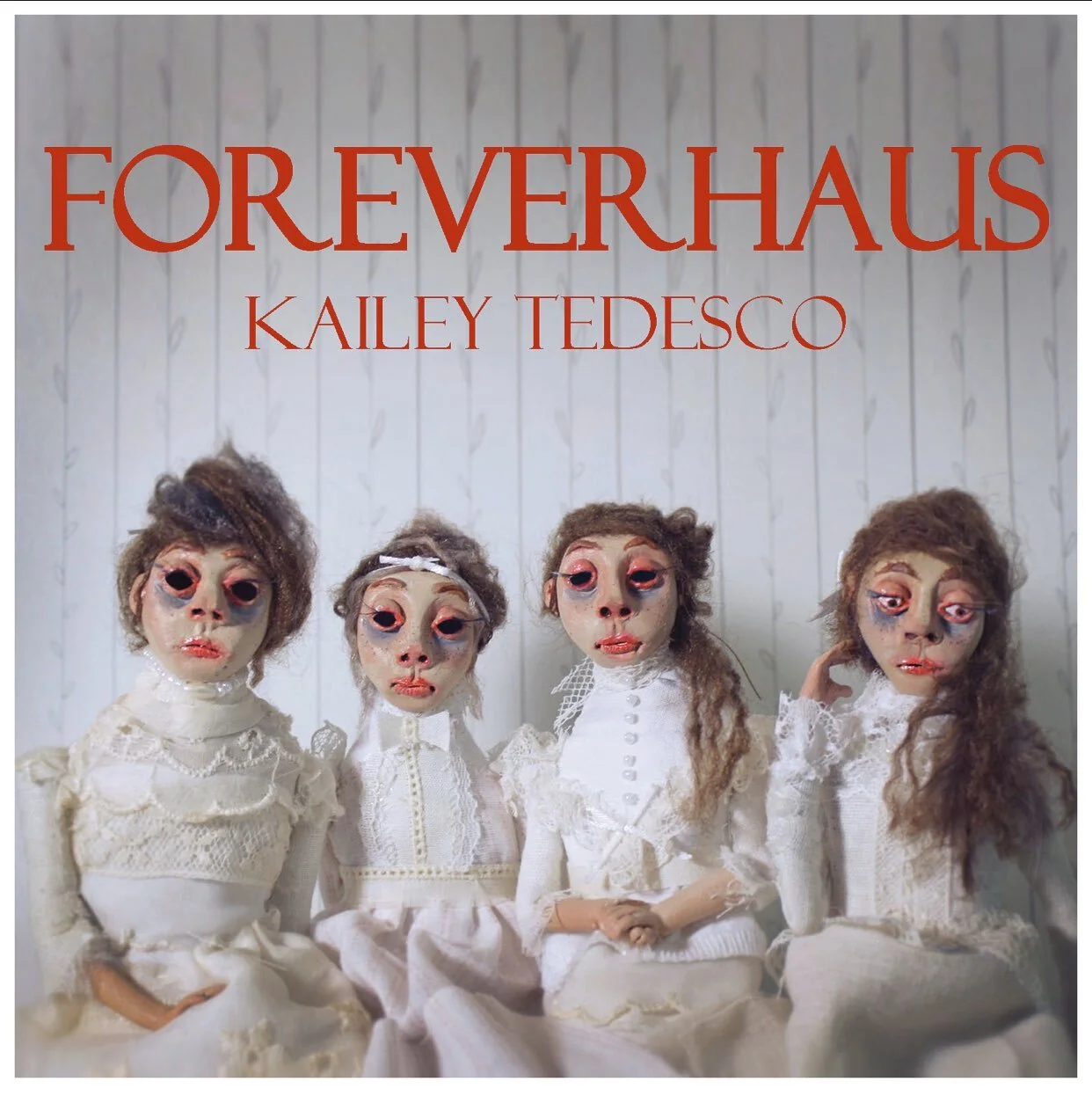
Local Lyrics - Featuring Kailey Tedesco

nursery rhyme
originally published in The Journal
by Kailey Tedesco

there is loss in the haus of loss—all of us
            embroidered in horror, twigs coming up 

from the back of our throats. i don’t want to know
            what is on the other end of the telephone. all of my parents          

become motherships. my favorite mother UFOs
            to me from her haus of tea—cups & saucers, hand-painted, 

gable her a-frame. i wake bruised in crop-circle, all 
            my flesh a runway of inexplicable. there are woods

in the haus of wood. all the trees woozy, teasing 
            a fall. when the murderer comes from the grave

with matchsticks, we will tell him to take everything
            he wants, but only if we are not there to see or hear him. 

there are dreams in the haus of dreams. i fight 
            sleep & wake to find myself sheared, stuffed

with stones. my gut fauna surrounds me in a vigil, 
            all my sweet demons. there is a flood in the haus of flooding. 

the lake waltzes, but doesn’t wave. i wake when my body
            won’t, scarleted in nightmare, pins & needles  

in my ears. there is sleep in the haus of sleep, 
            but so little. 

 
Cover.2020.jpg

Your poems have a gothic/horror/occult flavor to them. As popular as Edgar Allen Poe’s work is, there surprisingly aren’t a lot of poets working in this genre. What drew you to it?
My favorite thing about these genres are that they often are based upon a truth that is difficult to explain, and then through the lens of horror or the occult, the creator can seek to explain something that may, in the end, actually be unexplainable. That’s the magic in it all. This journey is often what I seek in my own writing, but in my reading and other media as well. Nearly all of my poems begin as straightforward confessionals based on something personal or truthful happening, and then they sprawl into something more illogical or fantastical or gothic as I crack them open wider and wider. For example, I’m in my second trimester of pregnancy now and at the same time working through some serious mental health issues for the first time. I’m absolutely nowhere near the first writer to explore pregnancy and mental health through the lens of horror, but I found myself surprised, nonetheless, by how easily these real life experiences lent themselves to these genres. My baby’s tiny hand running down my abdomen is beautiful and real, yes, but also the more I think about my body not being totally my own at the moment, the more disturbed I get. I strive for my poems to exist in these moments of disturbance and bewilderment, where things are both very beautiful but also very frightening.

One of the qualities of your work I really appreciate is that the worlds you create are breathable. They have that strange but hauntingly familiar quality. What are your strategies for grounding your poems?
Thank you! I teach a first-year writing course at Moravian College called Folklore and Legends: The Narratives we Choose to Believe, and one of the first things we look at when examining folktales as a genre is how these stories often begin in the realm of truth and then expand into the make believe. I like to apply that general narration style to poetry which is why I often begin with a more straightforward confessional or something very matter-of-fact. I love hauntings—the word haunting, the experience of being haunted, hauntings as a genre trope, a haunting cup or tea or bottle of perfume—the whole entire deal. And I think the coolest thing about hauntings is that they are, in all of their forms, so palpable and ubiquitous. I’ve never not been haunted, and the most unsettling thing about that feeling is that it’s already grounded in everyday experiences more than we might initially think. This is what makes authors like Shirley Jackson so fantastic—she writes about how ghosts and the occult mingle with the rigamarole of the everyday. A jar of jam can be haunted just as easily as a Victorian murder house can be. Those familiar hauntings are more or less what I hope to explore in my own writing.

How do you humor and explore poetic fascinations and preoccupations without getting too self-indulgent?
I think I’d say that I’m of the mind that self-indulgence in poetry is okay. I’m going to be careful with this statement because I’m certain there are exceptions, but I tend to be all about indulgences in poetry. There’s a line between arrogance and self-indulgence though, and I think this is usually pretty easy to detect. But I usually crave gaudy and gem-dripping and lush and wordy and excessive and sometimes even campy. And that especially applies when I find myself fascinated by something. I want to explore every facet and attempt understand how each of those facets applies to my own lived experiences. I’m also of the mind that the self is often the most important part of the poem, even if the poem isn’t “about” the self at all. It’s what gives poetry originality. I spent so many of my younger years trying to write and live like so many other authors, and I think that, more than self-indulgence, this showed up in and hindered my writing. If I’m into something and it is meaningful to me, I’m absolutely going to milk it.

I saw on your website you practice automatic writing. Can you describe this process and your experiences with it? Did this practice inspire Lizzie, Speak?
Yes, definitely! While in my MFA program at Arcadia University, I kept trying to work off of assigned prompts or set deadlines for myself to try to be more organized and studious about my writing. When I did this, everything felt extremely forced. I didn’t enjoy writing this way and my cohort was also picking up on how contrived my poems felt, because they truly were. I distinctly remember sitting down one day with the phrase “she used to be on a milk carton” playing over and over in my mind (which later became the title of my first book), and from that phrase, more words just oozed. I didn’t stop or question it—I just let the poem pour. This was the first time I felt energized by and connected to my writing in a very specific way, and so I kept exploring the feelings and environments that led me to this experience. I started reading about automatic writing practices, and later I attended a psychic retreat where I learned about working with the vibrations of names. This is what I do with a lot of my poetry; I begin with a word or phrase or image and then let the associations pour in while more or less in a trance state. This isn’t always easy to achieve and it’s not something I can plan, but it’s the method of writing that I find the most magical and enjoyable. I wrote a pseudo-craft essay about this exact thing over at Luna Luna Magazine for anyone else who might be interested in how this process works for me!

By the time I was writing Lizzie, Speak, I knew that I wanted to step outside of my own consciousness as much as I could and into Lizzie Borden’s. I used various divination techniques throughout this book to achieve this, including the IOS text predictive which strangely ended up being the most fruitful. I wrote this book faster than any of my others and I think a lot of that is because of how tapped into automatic writing and divination I was throughout the process. I loved the experience of stepping outside of myself, and I’m hoping to do something similar with my next project.

In addition to being a writer, you are an editor at Luna Luna Magazine. What excites you in others work? Are there qualities you see as quintessential to a successful poem?
Before I was on the staff at Luna Luna Magazine, it was already one of my very favorite publications. I would literally refresh the page over and over until new work popped up. So, it is such a huge honor to be able to contribute to and curate for the mag now. My aesthetic was already so aligned with LL’s, but I think the cool thing about that is how open our aesthetic actually is. I have such a hard time articulating what I find exciting in poetry, but I think that’s because I’m often most excited by what I didn’t previously know a poem could do. I love invention and I love strangeness. I also love poetry that is illogical, in the general sense of the word. I don’t want my favorite poems to “make sense” or operate under the realm of rationality. I think this ties to my philosophy on self-indulgence and just indulgence in general. My favorite poems indulge completely, and they’re totally unapologetic about it.

Where can readers find more of your work? Buy your books?
I’m finally getting into the habit of updating my website somewhat regularly, so readers can always check out my list of publications on kaileytedesco.com. My first book, She Used to be on a Milk Carton, is available for purchase on April Gloaming’s website. Lizzie, Speak and FOREVERHAUS can both be purchased on White Stag Publishing’s site as well as independent bookstores like The Spiral Bookcase and A Novel Idea, both based in Philly. My editor also created and curated some beautiful goods inspired by the poems in FOREVERHAUS like candles (made by Marvel + Moon), corn husk dolls, teas, and more. All of this can also be found on White Stag’s site.

One day, I hope to begin a newsletter, but in the meantime the best way to keep up with any of my goings on is on Instagram: @kaileytedesco. I post a lot of my writing here, but not anywhere near as often as I post pictures of my dog.


Author Photo (2).png

Kailey Tedesco lives in the Lehigh Valley with her husband and many pets. She is the author of She Used to be on a Milk Carton (April Gloaming Publishing), Lizzie, Speak (White Stag Publishing), and FOREVERHAUS (White Stag Publishing). She is a senior editor for Luna Luna Magazine and a co-curator for Philly's A Witch's Craft reading series. Currently, she teaches courses on literature and writing at Moravian College and Northampton Community College.


“Catfish” John Wojtowicz grew up working on his family’s azalea and rhododendron nursery in the backwoods of what Ginsberg dubbed “nowhere Zen New Jersey.” Currently, he works as a licensed social worker and adjunct professor. He has been featured in the Philadelphia based Moonstone Poetry series, West-Chester based Livin’ on Luck, Mad Poets Society, and Rowan University’s Writer’s Roundtable on 89.7 WGLS-FM. Find out more at: www.catfishjohnpoetry.com.


Profession: Poet

Profession: Poet is a new monthly blog feature exploring craft and identity in poetry by Hanoch Guy, who writes poems in both English and Hebrew.


The Limbic System Has Got Me Figured Out

I speak of fear, sheer limbic,
Reptilian fear, and there’s the rub:
Obliterate thought and all that’s left is fear…

- from “Sheer Limbic Fear” by Giuseppi Martino Buonaiuto (2015)


**The title of this blog post is taken from a
poem, published in 2016, by Arlo Disarray.**


After the demise of the giant reptiles, mammals started to populate the planet. They developed a new brain, named the limbic brain, about three hundred million years ago.

Mammals took care of their young, contrary to most reptiles who did not.

For me, the limbic system is the most fascinating one. It is a treasure trove, a housing of major critical life functions. Reviewing the different centers, we can be amazed at the variety and powers of this brain. 

Talking about the limbic system, “the cold world of reality formed into a bubbling cauldron of  human feeling, the forces of fear, elation, anger, and lust arising from this primitive region of the brain.” (Time-Life, Washington, D.C. (1980: 91))

It looks like two half-moons floating in brain fluid. It is also called the emotional feeling brain. It may also be called the poetic brain. It holds quite a few pathways to poetry.

 As other brains, the following centers can be viewed as metaphors, as brain capacities. Sometimes these are in different parts or are migrating.

Among other centers, the limbic brain contains:

  • our pain and pleasure center

  • the hippocampus, which controls long-term memory and breathing

  • the olfactory bulbs - very potent and rapid activators of memory

  • the thalamus or the affection center   

  • the autonomic nervous system

  • activators of hunger and thirst

  • control of the intestinal and digestive system

  • control of the immune system

  • control of the lungs

 Here are some ways to connect with the limbic system capacities:

  •  Write down the first feeling of pleasure you think of.

  • Write another sentence.

    • What comes up when you think of pain?

    • What else comes up about pain?

    • What is the first smell you remember?

 I am going to expand on the limbic system, memory, and poetry in a future blog.

 If you want to read an extensive analysis, check out The Limbic Brain by Andrew L. Lautin.


Hanoch Guy Ph.D, Ed.D spent his childhood and youth in Israel. He is a bilingual poet in Hebrew and English. Hanoch has taught Jewish Hebrew literature at Temple University and poetry and mentoring at the Muse House Center. He won awards in the Mad Poets Society, Phila Poets, Poetry Super Highway and first prize in the Better than Starbucks haiku contest. His book, Terra Treblinka, is a finalist in the North Book Contest. Hanoch published poems in England, Wales, Israel, the U.S., and Greece. He is the author of nine poetry collections in English and one Hebrew book.

Mad Poet of the Year - Ray Greenblatt (June 2021)

The Mad Poet of the Year blog posts share the poetry of a long-time Mad Poet. This year-long appointment provides readers with a deep dive of the writer’s work and thoughts on poetry. We are thrilled to have Ray Greenblatt serve as the inaugural Mad Poet of the Year for 2021.


unsplash-image-2gK9pP9b-Mo.jpg
 

WHAT IS FRENCH?

 by Ray Greenblatt

 It’s the lips!

 Brigitte Bardot                     B . . .   B . . .
Moi . . . Moi . . . Moi . . .
She stretched her lips around the world
spurring every cosmetologist
every plastic surgeon,
want to be more hippy
          which Mother Time would provide for free,
reconfigure your boring navel
          into a mandala,
but Botox became as common
          as Bromo-seltzer . . .

 It’s the lips!

Bent toad of a man
Monsieur Hercule Poirot,
spats and monocle
gleaming gold watch chain a yard long
with a sapphire fob like a third eye,
mumbling beneath his moustache
          mysterious mantras . . .
magnifying glass
          and pursed line of lip
to discover recherché clues . . .

It’s the lips!

To read Marcel Proust aloud
“A La Recherche Du Temps Perdu” . . .
inside a cork-lined study
          and at the same time
inside a white chateau
surrounded by a bright black spiked
          fence of wrought iron,
Swann reading
”Les Trois Mousquetaires” . . .
while the elite munch madeleines
          lisp café au lait . . .

It’s the lips!

Baguette on the back of a bicyclette . . .
to break the warm, crisp bread
          and taste fresh, pure, fragrant softness;
brie warm in the sun
dribbling over the table
          a la Dali;
blood of the vine
          bloodline of the country
tasters sloshing Malbec, Muscadet
to measure vintage, body, je ne sais quoi . . .

fois . . . bois . . . foie gras . . .
It’s the lips!


I have been fond of France and things French from the time I was a youth. I like the literature (Camus, Daudet, Montherlant), food (especially the wine and cheese), cinema (Truffaut, Chabrol, Malle), classical music (Ravel, Debussy, Milhaud), art (Monet, Braque, Vuillard), Paris, the lush countryside, etc. I studied French throughout high school and took a minor in French literature in college. But I especially like the sound of French; I frankly admit that I love to watch a woman’s lips when she speaks French!


Ray Greenblatt has been a poet for forty years and an English teacher longer than that. He was an editor of General Eclectic, a board member of the Philadelphia Writers Conference, and is presently on the staff of the Schuylkill Valley Journal. He has won the Full Moon Poetry Contest, the Mad Poets Annual Contest, and twice won the Anthony Byrne Annual Contest for Irish Poetry sponsored by The Irish Edition. His poetry has been translated into Gaelic, Polish, Greek and Japanese.

Mad Poet of the Year - Ray Greenblatt (May 2021)

The Mad Poet of the Year blog posts share the poetry of a long-time Mad Poet. This year-long appointment provides readers with a deep dive of the writer’s work and thoughts on poetry. We are thrilled to have Ray Greenblatt serve as the inaugural Mad Poet of the Year for 2021.


unsplash-image-mC0413G04Ww.jpg
 

SPACE AND TIME

 by Ray Greenblatt

 SPACE I

He sits at a metal table
trying to imagine
mesons at play in the box
dreaming of things so miniscule
and unpredictable
beside the plasticized salami-on-rye,
then he mounts the steel circular stairs
tartan scarf flying
cracked briar puffing
rings round his cranium
in frosted air,
the dome begins to split
like God’s eye opening
or a monster’s maw yawning
while he squints through the telescope
at helixed galaxies
brown dwarves, imagining
gravitational tides, black holes.

SPACE II

          The wall stands thick and tall
with bunkers and pillboxes
every few yards.
Sentries stare down
at the long valley
where mountain slopes are still umber
even shadows the shade of ashes
even though it’s fecund spring.
The females are distinguished from males
only by the way their contoured hair
flips out from under the helmets.
The young soldiers giggle together
now passing cigarettes and whispers
sometimes asleep while at attention.
Longitude merely stops at the Pole,
they stand on a parallel which turns
round and round the world,
degrees measured to the enth
invisible beneath their feet.

TIME I

          Starter’s gun glistens and sparks,
cinders kicking up
and nipping like no-see-ums
heat but a shrug
opponents phantoms,
as she traces her ovate route
past the sand pit
stacked hurdles
row of 12-pound shots
all milestones,
javelins stuck in the ground
as those flung by Achilles
against Trojan walls—
then before her
in the final stretch
a band of fog above the brook
a white tape along the horizon.

 TIME II

           Calendar pages flip
as if caught in a dirty breeze,
he has become a legal autodidact
an unofficial barrister
(he knows that word too).
No longer necessary to chew
the chip of balsa wood,
listen to sighs down the hall,
reread news clippings
about the murdered family.
But all the TV’s, computers, iPods
don’t add up to jack.
He can feel the vaulted corridor
with dim recessed lights
gray damp stone
doors clanking shut
odor of baking or a roast.
His epitaph: Monday, 8 A.M.
the eternal day.


Space and time can be relative, as Einstein posited; space and time can be eternal, as seen in an observatory. However, at the other end of the spectrum, a certain space—say, crossing a nation’s border—can mean war or peace. And a split second can mean the win or loss of a race—or life.


Ray Greenblatt has been a poet for forty years and an English teacher longer than that. He was an editor of General Eclectic, a board member of the Philadelphia Writers Conference, and is presently on the staff of the Schuylkill Valley Journal. He has won the Full Moon Poetry Contest, the Mad Poets Annual Contest, and twice won the Anthony Byrne Annual Contest for Irish Poetry sponsored by The Irish Edition. His poetry has been translated into Gaelic, Polish, Greek and Japanese.

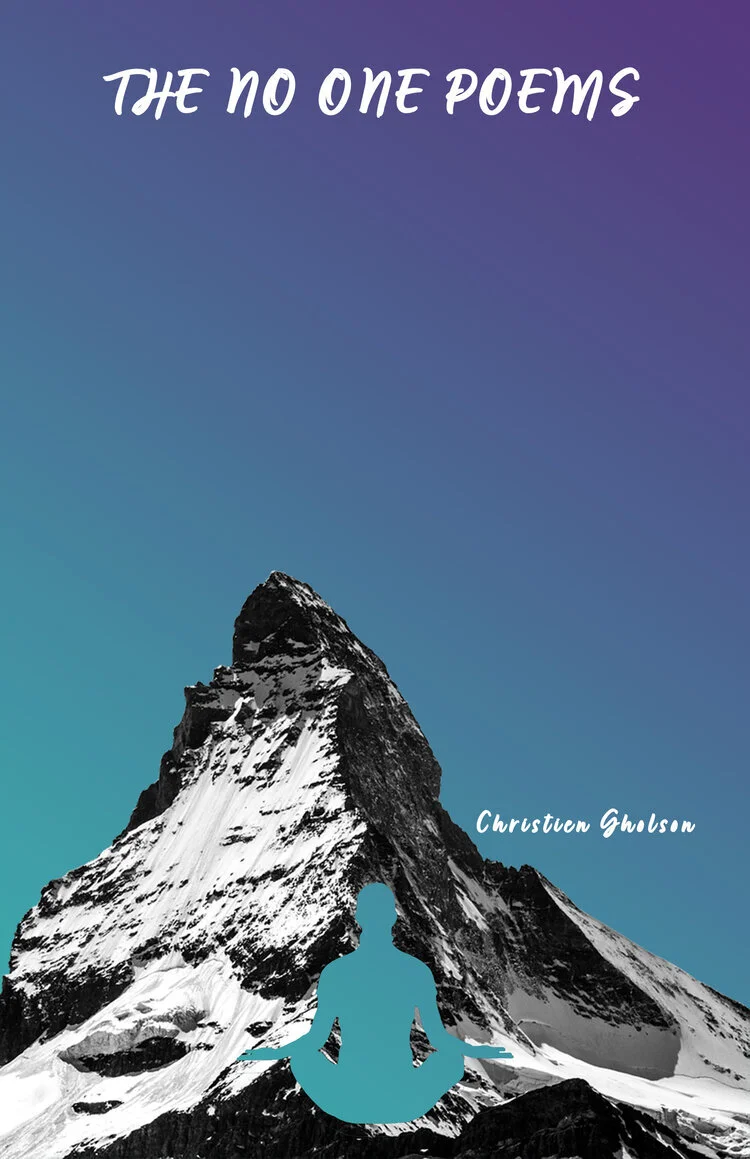
Review of Christien Gholson’s The No One Poems

Review of Christien Gholson’s The No One Poems

May 26, 2021

CGholson_The+No+One+Poems_Cover+1.jpg

The No One Poems

Thirty West Publishing

$11.99

You can purchase a copy here. A limited edition with alternate cover, sewn with 100% hemp or bamboo cord, is also available.

Reviewed by Chris Kaiser


The No One Poems, the newest chapbook from Christien Gholson, is at times an homage to the four greatest poets of the Tang Dynasty (618-907): Han Shan, Li Bai, Wang Wei and Du Fu. These poets are known for their focus on nature and friendship, but also politics, everyday events and humor. Gholson follows their example, with the poems exuding a kind of bleak enlightenment.  

In the opening poem, “No One’s at the Cash Register” (After Han Shan), a poem in 10 sections, we find the titular character working the cash register at a convenience store. In his first line, he boldly states: “If you’re looking for a / peaceful place, this is not it.” He then ticks off a litany of indignities he is subject to on a daily basis from his boss and the customers, including:

They say: smile more,
you’re scaring the customers.
They say: smile less,
you’re scaring the customers.

Han Shan was also known as Cold Mountain, a place where he supposedly lived (historians are not entirely certain he actually existed) and wrote about. In the poem, No One says:

No
use for words on Cold Mountain.
So, why come down? The moon
asked me to pick up some
bananas for her. And cash. I
needed the cash.

I laugh every time I read those lines.

No One came down from the mountain 20 years ago and has worked at the store ever since, which I guess goes to show you, stay in your comfort zone.

Gholson has many beautiful images and lines in this collection of 13 poems. In the second poem, “Shadows, Wandering” (After Li Bai), for example, the narrator hears news of a death. He wonders when the last time he had talked with the deceased was. Ghosts of the unknown haunt every nook and cranny. He says: “Everything, absolutely everything tonight, is porous. / My fingers touch the cold, the reflected light, other shadows.”

Even when the poet writes about shootings, he does so in a way that is stark as well as gentle. In “Seven Songs Sung at Reservoir No. 4” (After Du Fu), a poem in seven sections, the narrator notes: “One dead, two dead, a dragonfly’s / wing-song leads me to my first song sung here.” But his anger also comes out when he says: “Fuck your Prayers is my third song sung, to drown out the dead who feed on the dead…”

No One also comments on the doublespeak of politicians whose endless words “tumble out of [their] mouths. Insects / sucked dry” (“No One Watches the Men Talk Behind Podiums”). For his sanity, No One has to leave the press conference, and “watches the hummingbird / moths in the lavender.” This only soothes him momentarily, for “When the moths speed / off” he “feels the dead words stir the air… / the dead words stir and stir…”

Gholson is the author of two poetry books, several chapbooks, and a novel. It is obvious that an experienced hand wrote The No One Poems. He dances between heaven and Earth, goes deep inside the flesh, reminisces about the amorphous past and contemplates the undefined future.

In the last poem, titled “No One,” the narrator tells us, “Becoming No One is not a choice.” I think Gholson wants us to believe that it happens when you let go of limiting beliefs:

When did he finally let go
of being someone else’s no one
and choose to be his own?

I highly recommend “letting go” and including this chapbook in your poetry collection. You will gain a sense of righteous rage and quiet awe—two of my favorite states of mind.

Chris Kaiser’s poetry has been published in four anthologies by Moonstone Press, including a tribute to Lawrence Ferlinghetti (2021), as well as in Eastern Iowa Review, The Scriblerus, and Better Than Starbucks, including “Black Bamboo: Better Than Starbucks Haiku Anthology 2020.” His poetry has also appeared in Action Moves People United, a music and spoken word project partnered with the United Nations. He’s won awards for journalism and erotic writing, holds an MA in theatre, and lives in suburban Philadelphia.

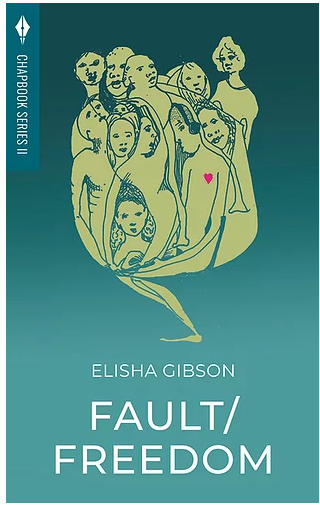
Review of Fault/Freedom by Elisha Gibson

May 19, 2021

Capture.PNG

Fault/Freedom

Toho Publishing

$12.00

You can purchase a copy here.

Reviewed by Sean Hanrahan


Unique. Confident. Lyrical. These are just three of the words that can be used to describe Elisha Gibson’s sterling debut chapbook, Fault/Freedom. This collection beautifully, painfully, yet, amazingly, also joyfully captures the vicissitudes of life.

In the engrossing poem, “A Little Thing,” Gibson writes about the speaker’s painful and formative childhood experience in almost cinematic detail:

I never asked why that man didn’t want our hands
on his window
My eyes were shining!
Lights of gold shone through bottles of green
and blue just out of reach,
a reach I never considered.

 The store owner confronts the narrator and their three siblings, calls them “Dirty,” and uses his relative size and position to threaten them just for touching his window: “See, this man was tall, strong, and white.” Expertly deploying an apt comic book/film metaphor, Gibson effectively deploys a modern-day deus ex machina, “My pops swooped in,/ all superman, no cape.” The children are removed from the painful situation and their dad “started a game when just talking was enough,/I played, had fun, and tried to let this little thing go./ But if it is so little… why didn’t he want our hands on his window?” The narrator comes to a painful realization about American life, and Gibson captures that moment with a perfectly precise lyricism.

This vibrant chapbook also captures the feeling of radiant joy, especially in one of the standout poems in this collection, “Big Band Beach.” Gibson thrills with jazzy lines such as:

Piano play, discordant way, while I soak in azure sky.
Sun was high, his halo hung,
faint green,
round brilliant white,
round canary yellow,
that would bind you with delight.

“So Benign” is a haunting poem that also discusses music and its inherent power, specifically the heartbreaking protest song, “Strange Fruit.” In the right-hand margin, the word “lullaby” textually hangs suspended with one letter per line as it makes a political comment on the controlled, rhythmic language of this poem: “I’ve got strange fruit on my mind./ Bitter copper juice runs through hemp spun vine./ No words pierce my lips as they sway wind picked lines. Their feet bob and dip, ripened past their time.” In this collection, Gibson confronts the terrible legacy of racism as well as celebrates Billy Holiday’s groundbreaking song. It takes a true poet and visionary to craft a poem that tackles so much in ten perfect lines.

Another ekphrastic poem to be found in this collection is “Jerry, Know Tom.” In this poem, the speaker returns to their childhood watching cartoons, a favorite former pastime for many of us I am sure. Gibson repeats a refrain that almost becomes a mantra: “Lampshade overhead, the clumsy cat’s disguise. Cartoon and corn flakes for my youthful eyes.” Gibson jolts us out of this idyllic scene into the present reality of life in America: “You’d think we riot or get vest for the guns.” Gibson’s poetry keeps the reader on their literary toes.

This chapbook collection is an assured debut from a poet who has found their voice and undoubtedly has more to say as we wend our way through the twenty-first century. We, the American readers, will need a visionary like Gibson to show us life in all of its beauty and pain. With their precise, enviable wordcraft, Gibson will be that poet. Fault/Freedom is an exciting first step on their sure-to-be-incredible poetic journey.                                    


Sean Hanrahan is a Philadelphian poet originally hailing from Dale City, Virginia. He is the author of the full-length collection Safer Behind Popcorn (read review here) (2019 Cajun Mutt Press) and the chapbooks Hardened Eyes on the Scan (2018 Moonstone Press) and Gay Cake (2020 Toho). He is currently at work on several literary projects as well as teaching a chapbook class. He currently serves on the Moonstone Press Editorial Board, is head poetry editor for Toho, and is workshop instructor for Green Street Poetry.

Local Lyrics - Featuring Mark Danowsky

Danowsky bio photo 3.jpg

What Is Lost, What Will Never Be Known
by Mark Danowsky

 The pileated woodpecker returns to the dead white walnut.

 I am reminded we keep the dead with us
in memory, we replay their highlights.

When a person dies, we say we lost more
than their life. What does the pileated mourn?
My memory fails to serve and I mourn what I will never know.


There’s a mindful almost meditative quality to your work. Where do you find inspiration? What is the creative process like for you?
I cherry pick from my experience as well as from what I witness and read. What I mean is that I take what I want, sometimes out of context. I’ve always found this to be a fun way to learn and engage with texts and the general acquisition of knowledge. Poets need to stay curious, receptive. We need a touch of Peter Pan syndrome. Not everyone likes the cherry-picking concept. I’m not thrilled that I’m inclined to even mention Trump but he’s become a part our lives and we have to live with his legacy now. There was that time tweeted a Mussolini quote and, in defense, said, “I want to be associated with interesting quotes.” Taking material out of context is an easy way to get yourself in trouble, no question. A lot of people have had a lot of bad ideas. Some not so great people have had some pretty good ideas. This isn’t all that surprising. We contain multitudes – yada, yada, yada. I don’t know that poets necessarily want to be associated with the material they cherry pick from. It’s like when someone puts in their Twitter bio, “Retweets do not equal endorsements.” They do and they don’t. It’s important that, as famous thinkers have discussed, we learn to hold irreconcilable ideas in our head at the same time. We cannot default to black and white thinking. This is my permission, I suppose, to take quotes from unsavory figures and use them as you wish in your poetry. A good poet can spin anything into gold.

In addition to being a poet, you are the founder/editor of ONE ART: a journal of poetry and senior editor of Schuylkill Valley Journal. You also write a blog and have an editing service. What is your experience of being enmeshed in a literary life?
I’m in a state of constantly evaluating and reevaluating my situation. All artist types need to do this. It’s essential for time management. In recent years, it’s become increasingly important to me to become a good steward of the arts. My identity as a poet still matters a great deal to me; that being said, I feel it matters less to the greater literary community. This is understandable. As an editor, I seem to provide a more desired, more impactful service to the community. From where I am now, I can say that I’m good with focusing my energy on what I can do for the community. I don’t want to sound like a martyr or anything though. My life path has a lot to do with my choices. I would prefer to see most working poets/writers/artists focus on their personal work.

I once had the idea to create a writing schedule like a workout routine: Mondays and Fridays for editing. Tuesday and Thursday for composing new work. Wednesday for haikus. It did not end up working out. How do you juggle all the demands of being a writer? How do you find time to actually write?
This comes down to the type of person you are. Previously, I was the type of poet who wrote well on so-called “stolen time.” That is, I would be supposed to be working or editing and then a thought would pop in my head and I’d run with it on the page. This still happens from time to time. I’m not the sort of poet who is terrific at blocking off time to “be creative.” I’m not a big believer in the flow state for poets. Or, let me rephrase that, I’m not a big believer in the flow state as a required headspace for poets writing an individual poem. If you’re sitting down to assemble a collection, that’s a whole different skillset and you need to be able to hold a lot of the material in your head at once while uninterrupted. I’ve been interested in residencies and writer’s retreats for years, but I feel like most poets need something much different than, for example, longform prose writers. Poets who work on projects that require a great deal of research can probably benefit from a more traditional residency. I’m more of the type that just needs to be put in random places for little chunks of time to respond to whatever is happening to me. Not to pigeonhole myself but it feels like a form of neo-confessionalism.

Do you notice common themes emerging in your work? What are your muses?
Poets perseverate on the same themes. That’s an unusual use of that term, perseverate, but it feels accurate. We all have our special interests. Lots of poets who probably do not describe themselves as “nature poets” or “eco-poets” write about the natural world. We all have our favorite words and turns of phrase. James Longenbach once said that it takes a long time for poets to sound like themselves on the page. It sounds straight-forward but it’s not. It’s putting in your 10,000 hours. It’s incredibly difficult to sound like yourself on the page. Our voice(s), of course, evolve over time. That’s totally natural and fine. No one has to write pastiches of themselves to please some theoretical audience.

In your book, As Falls Trees, the poems in the collection center around the lives of trees. How did this collection come about?
Where can readers find more of your work? Buy your books?
When I lived in a particular space in West Virginia, there was a back porch that looked out on a forested area on a mountainside (because everything in West Virginia is on a mountainside). It would have been almost difficult not to write about the birds and trees because I was in such close proximity with the natural world. My personal life was very difficult at the time but I was also surrounded by a great deal of natural beauty. I think that, in part, explains how As Falls Trees happened.

If you’re interested in buying a copy of As Falls Trees you can contact me directly. I’m also available to field any questions about ONE ART: a journal of poetry, Schuylkill Valley Journal, and my editing service VRS CRFT.


Danowsky bio photo (1).jpg

Mark Danowsky is Editor-in-Chief of ONE ART: a journal of poetry and Senior Editor for Schuylkill Valley Journal. He is author of the poetry collection As Falls Trees (NightBallet Press). His work has appeared in Bird Watcher’s Digest, Cleaver Magazine, Gargoyle, The Healing Muse, and elsewhere.


“Catfish” John Wojtowicz grew up working on his family’s azalea and rhododendron nursery in the backwoods of what Ginsberg dubbed “nowhere Zen New Jersey.” Currently, he works as a licensed social worker and adjunct professor. He has been featured in the Philadelphia based Moonstone Poetry series, West-Chester based Livin’ on Luck, Mad Poets Society, and Rowan University’s Writer’s Roundtable on 89.7 WGLS-FM. Find out more at: www.catfishjohnpoetry.com.