In Their Words - an Interview with Bill Van Buskirk

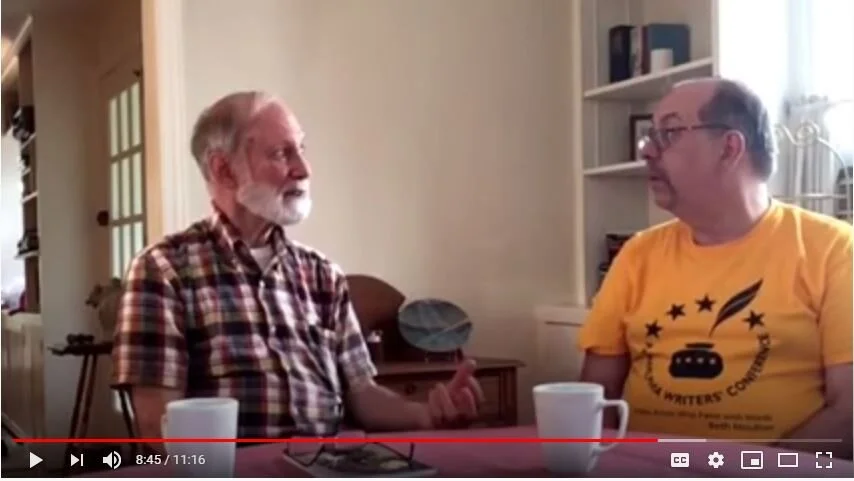
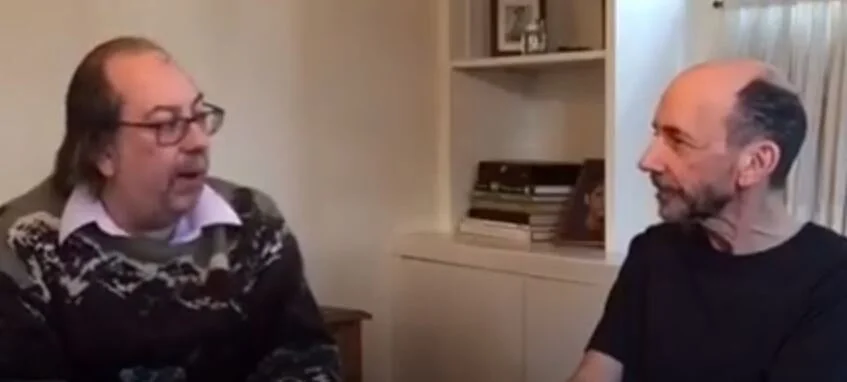
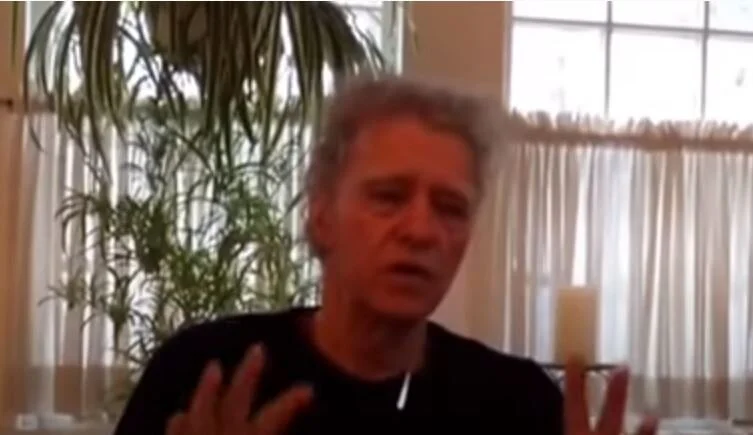
Back in 2017, Steve and Mike sat down with Bill Van Buskirk. He presents a few poems, and they discuss writer’s block, Zen, and why we write.

Click the picture to see this part of the interview. For the complete interview, go to Mike Cohen’s Youtube channel by clicking HERE.


bvb.jpg

Bill Van Buskirk lives in Bryn Mawr Pennsylvania. His poems have appeared in The Comstock Review, The Paterson Literary Review, LIPS, The Schuykill Valley Journal, Parting Gifts,The Mad Poets’ Review and many others. His chapbook, Everything that’s Fragile is Important, received an honorable mention in the Jesse Bryce Niles Chapbook contest (2007). His book, This Wild Joy that Thrills Outside the Law, won the Joie de vivre contest sponsored by the Mad Poets’ Review (2010).


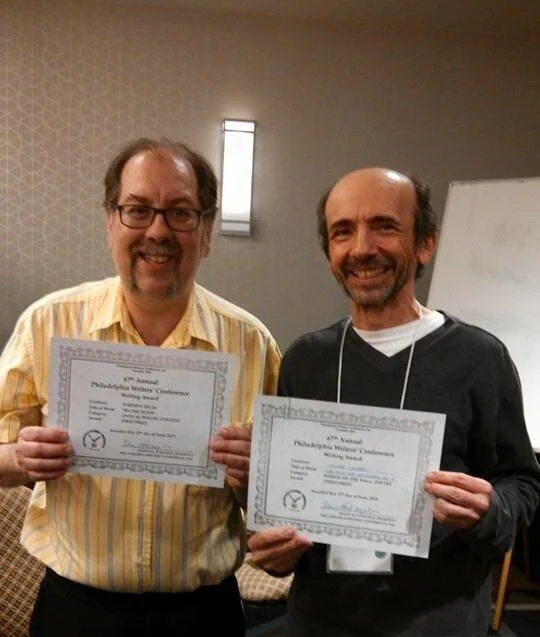
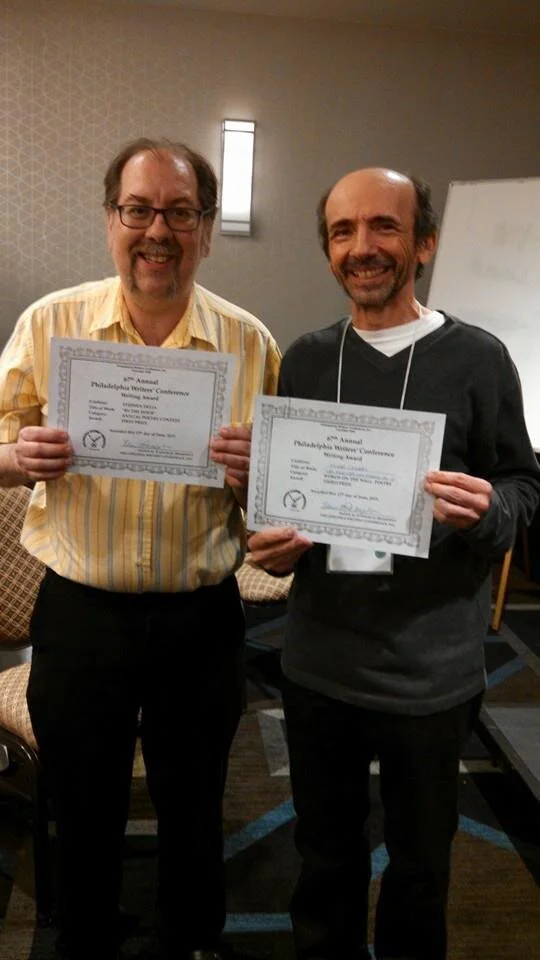
Delia and Cohen.jpg

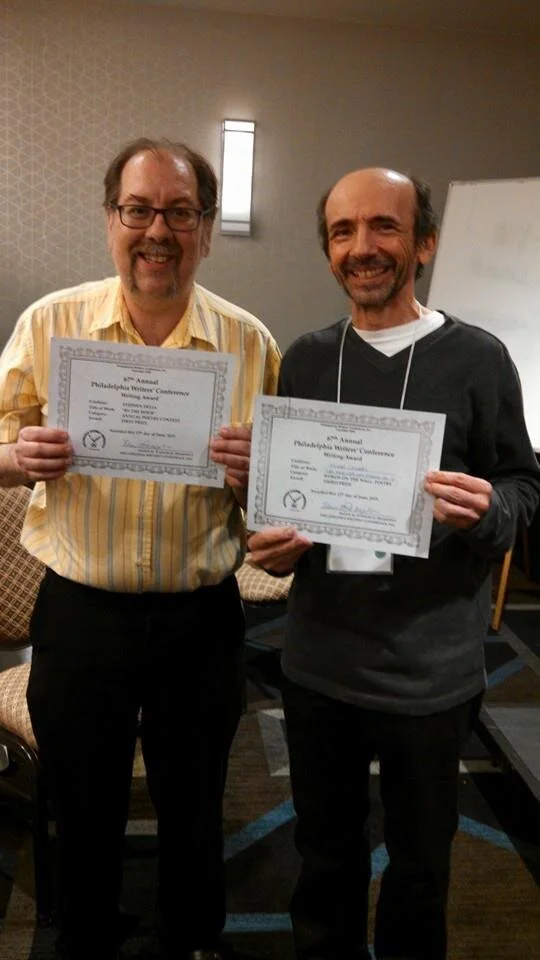
Steve Delia and Mike Cohen have worked collaboratively and independently as poets and supporters of the arts in the Greater Philadelphia area. Mike Cohen helps to run the Poetry Aloud and Alive series at the Big Blue Marble Bookstore, and has had his fingers in many poetic ventures over the years. Steve Delia is the author of 6 chapbooks of poetry, and has read in a variety of venues, including the Philadelphia Writers Conference and on WXPN. Steve and Mike have also appeared throughout the Philadelphia area as the Dueling Poets.

POeT SHOTS - 'MIRRORS AT 4 A.M.' by Charles Simic

POeT SHOTS is a monthly series published on the first Monday of the month. It features work by established writers followed by commentary and insight by Ray Greenblatt.

POeT SHOTS #9, Series C

MIRRORS AT 4 A.M.

You must come to them sideways
In rooms webbed in shadow,
Sneak a view of their emptiness
Without them catching
A glimpse of you in return.

The secret is,
Even the empty bed is a burden to them,
A pretense.
They are more themselves keeping
The company of a blank wall,
The company of time and eternity

Which, begging your pardon,
Cast no image
As they admire themselves in the mirror,
While you stand to the side
Pulling a hanky out
To wipe your brow surreptitiously.

This poem is full of mystery. Is there any place in the world for humankind? Inanimate things—mirrors, walls, time, eternity—thrive. They do not want to put up with even “an empty bed” or hanky, let alone our image in the glass. Sarcastically, they do not “beg our pardon.”

greenblatt.jpeg

Ray Greenblatt has been a poet for forty years and an English teacher longer than that. He was an editor of General Eclectic, a board member of the Philadelphia Writers Conference, and is presently on the staff of the Schuylkill Valley Journal. He has won the Full Moon Poetry Contest, the Mad Poets Annual Contest, and twice won the Anthony Byrne Annual Contest for Irish Poetry sponsored by The Irish Edition. His poetry has been translated into Gaelic, Polish, Greek and Japanese.

Review of Sean Hanrahan’s Safer Behind Popcorn

sean hanrahan.jpg

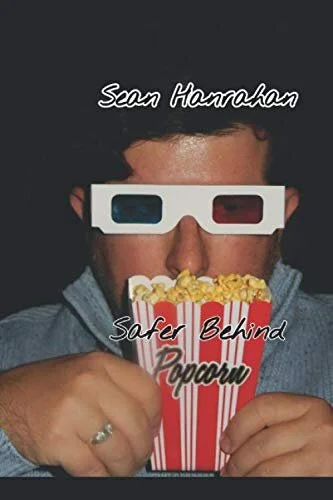
Safer Behind Popcorn

By Sean Hanrahan

Cajun Mutt Press 2019

You can buy the book here.


Reviewed by Chris Kaiser


“The writing style creates a breathless, frenzied energy that almost feels like we’re swept up in a movie narrative.”

The full-length collection of poetry titled Safer Behind Popcorn by Sean Hanrahan is a whirlwind journey through old and new Hollywood and popular culture, exploring not only the absence of notably gay figures, but also the damage that such absence does to the psyche of young and impressionable LGBTQ minds.

Hanrahan uses biting wit and an immense storehouse of film knowledge to probe the inner and outer boundaries of a suffocating cultural norm that left him and many other gay men drifting aimlessly during crucial times in their lives when larger-than-life role models would have been beneficial.

Have there been advancements in how gay characters are treated in Hollywood movies? Well, Brokeback Mountain had the most Oscar nominations of any film in 2005, but lost to Crash in the Best Picture category.” Eleven years later, Moonlight, a film about the struggles of a black, gay man, won Best Picture.

“There’s still a stereotype problem,” Hanrahan told me in a phone interview. “TV has come farther than film,” he admitted, “but until we get a gay Tom Cruise-type character that stands for something other than being gay, we’ll still lag behind.”

There’s no doubt Hanrahan was angry when he wrote many of the poems in Safer Behind Popcorn. And can you blame him—when we have to rely on the U.S. Supreme Court in 2020 to affirm that the 1964 Civil Rights Act prohibits discrimination against gay and transgender workers!

In the book, Hanrahan often vents about the indignities gay men like himself face in a world where heterosexuality is prized as the norm. A huge film buff, Hanrahan uses movies as the backdrop for many poems that call attention to discrimination—or just plain nonexistence.

In the opening poem “Film Noir You,” the poet takes old Hollywood to task for its narrow-minded treatment of gay actors and characters. He writes:

you thought
my eye was on the fop
sweat I knew he would not
make it to the final
reel since directors are
convinced pansies are so
evil

The writing style Hanrahan employs here—short sentences with no punctuation—creates a breathless, frenzied energy that almost feels like we’re swept up in a movie narrative.

Hanrahan writes that if Hollywood directors used more gay characters, their “wrists will tire of / soft angles” and that gays don’t sell well overseas, “taking our / morality from box / office receipts.”

 He ends this poem about Hollywood’s gay cancel culture thusly:

Humphrey may
have had his own Paris
with me but in forty-
three we were denied black
and white reality
kept out of cinemas
escorted from backlots
with our genitals snipped
bleeding out without a
cause or a backstory

While reading Safer Behind Popcorn and researching many of the themes in the book, I came across a 2016 article in Out magazine titled “Decoding the Gay Subtext in the Hollywood Classic, The Maltese Falcon.”

In the poem “Humphrey,” Hanrahan touches on some of the themes discussed in the article, such as Bogart’s manliness, his effeminate co-stars, and the phallic nature of the Maltese falcon.

But in the end, the celluloid closet wins. “Homosexuality cannot survive the noir, a McGuffin / for bigots blinkered by the unfamiliar.” That line also is just one of the many beautiful poetic phrasings Hanrahan is capable of.

Hanrahan has a lot to complain about, given the bigoted behavior of society towards LGBTQ people. But the poet often shows his softer side as well.

The prose poem “Wishing You Were Here with Me” is a wonderful, sometimes bittersweet, ode to Hanrahan’s relationship with his grandfather. The poet notes that he was different from the other grandsons. Movies were his passion, rather than sports. But the sports movie, A League of Their Own, plays a pivotal role in the young poet’s life.

The poet is reminiscing decades after watching the movie with his grandfather. He writes: “A strange occurrence that a man from a Western / Pennsylvanian town could believe in me and / accept me even if he never fully understood why / I was so different from my local cousins, that I was so / different from everything he had ever encountered.”

The poet is confident, he writes, that his grandfather would have been his biggest champion had he “lived to see me come out.”

But while Hanrahan and his grandfather were bonding, the poet still lacked a language to get him through “jock hero” crushes in high school. He had to keep his distance from his man-crush because he couldn’t even articulate how he felt. “Hollywood / hadn’t invented a language, just some vague actors hanging / around the edges of John Hughes’ films.”

The ease with which Hanrahan weaves in and out of movie metaphors is impressive. Not only are people in his life connected to specific movies, but also the filter with which he views the world is intimately connected to movie making.

In “Supporting Actor,” for example, the poet writes about his uncle, who is dying of cancer: “We wrote each other / out of our screenplays, supporting actors / missing from the latter reels of the film”.

This poem also contains one of my favorite lines: “so many decades dissolve / like half-melted candy stuck in a cluttered glovebox.”

Another good line comes from the poem “The Pansy and the Maid,” where Hanrahan rails against the movie-making Production Code that limited screen exposure for black and fey characters. “They need to be assuaged our / light loafers won’t pinch heroic toes.”

And this gem from “The Sword in the Stone”:

Then, I’ll pull a rusted
sword from the stone
my heart has become,
petrified from accumulated death.

Hanrahan is originally from Virginia, and has lived in Washington, DC, and New York City on his way to Philadelphia, where he currently resides. In 2018, he published the chapbook, Hardened Eyes on the Scan (Moonstone Press) and this spring, Toho Press published his chapbook, Gay Cake. He’s been published in anthologies and journals, and currently serves on the Moonstone Press Editorial Board, is head poetry editor for Toho Journal, and is an instructor for Green Street Poetry.

He told me that if it weren’t for reading Sylvia Plath while in high school, he wouldn’t be a poet today. Other poets that have influenced him include Sonia Sanchez, e.e. cummings, Mark Doty, Allen Ginsburg, and Frank O’Hara.

This is his first full-length collection of poetry and the scope is striking. Hanrahan takes us to Paris and Morocco, to Naples and New York City and beyond. His subjects span popular culture, including Johnny Depp, Luke Perry, Prince, Mel Gibson, Madonna, Wonder Woman, Oscar Wilde, Marylyn Monroe, and Jeff Daniels.

 The last name, Jeff Daniels, appears in the poem “Egyptian Rose,” from which the book gets its title: “I wish Jeff Daniels would walk out / through the screen into my life. / He’s safer behind popcorn, though.”

One thing Hanrahan doesn’t do in Safer Behind Popcorn is play it safe. Knives are unsheathed as he skewers popular culture for turning its back on the LGBTQ community. But even at his most devastating, Hanrahan cannot conceal his love of Hollywood and movie making.

 And he does so with a poetic energy that is fresh and evocative, with language that is carefully crafted and seemingly spontaneous, and with a reverence for art that leaves one salivating for a large bucket of buttered popcorn and a good movie.
Chris Kaiser’s poetry has been published in Eastern Iowa Review, Better Than Starbucks, and The Scriblerus. It appeared in Action Moves People United, a music and spoken word project partnered with the United Nations, as well as in the DaVinci Art Alliance’s Artist, Reader, Writer exhibit, which pairs visual art with the written word. He’s won awards for journalism and erotic writing, holds an MA in theatre, and lives in suburban Philadelphia.

Local Lyrics - Featuring R.G. Evans

Local Lyrics hosted by John Wojtowicz appears on the 3rd Monday of each month. In it, John features the work and musings of a local poet.

I find that most people are hungrier for poems than they know. It’s like having a vitamin deficiency. Your stomach may be full, but your body isn’t being nourished.

MOON AT DAY

Pulling down the rotten boards
of a swing set no longer loved,
I feel you up there over my shoulder.
I built these swings myself
a dozen years ago. The tilt,
the lurch, my work for sure.
Now I pull it down and you pull too,
eye that couldn’t wait for the night.
The tide in me rises to think
of those unborn children
who might have made me keep
these posts from falling apart.
A little paint. A little patch.
Maybe you’re one of them,
looking down on me now
as I go about my best work:
destruction. Only one of you there,
precocious, ignoring bedtime.
Where’s the other?
Maybe Halley’s Comet, silver sibling,
running wild across the heavens,
not to return till I’m most surely gone.
These boards are full of rusty nails.
My knees creak like the gallows.
My daughter is sealed away in her room
writing stories that don’t include me.
Only you can see me wipe my eyes
that burn in the lowering sun.
Only you have the grace to linger
as sky gives way to sky, empty blue
to a black freckled with impossible light.

Evans 1.jpg

Q and A:

How would you describe your poetic aesthetic?

I would say my poetic aesthetic is as broad as the range of poets who have influenced me. Sometimes my poems resemble the philosophical “mindscapes” of Stephen Dunn. Sometimes they are weirdly surrealistic like the work of Russell Edson or James Tate. Sometimes humorously bewildered like the prose poems of Louis Jenkins.

In your award-winning book Overtipping the Ferryman, you’ve collected poems that cover experiences over a breadth of (seemingly) lived experience. What was your process in selecting/organizing these poems?

That book is essentially every poem that I had written over the course of maybe ten years that I deemed worthy of being included in a book. One of my poetry mentors, Renee Ashley, always writes poems with the end goal of a book in mind, but I had never written poems before with the intention of publishing a book. Once I chose the poems I thought were good enough to collect, I looked for links between them—themes, images—and then ordered them accordingly.

You are retiring this month after 34 years of teaching high school English. How have your thoughts about the place of poetry in America changed during your tenure working with youth?

I find that most people are hungrier for poems than they know. It’s like having a vitamin deficiency. Your stomach may be full, but your body isn’t being nourished. I’ve seen young people come alive not only from being given permission and the time to write poems, but also in the interpretation of poems in non-creative writing classes. Poetry is often neglected in the American high school, and everyone is much worse off for that fact. Many times, young people have introduced me to poets they are passionate about as well, so I would say the place of poetry in America is a still a very narrow street but very much a two-way street.

Is there anything unique about your process? Do you have any advice for writers struggling to find their voice?

Usually if I’m not reading poetry, I’m not writing it either. There something about reading good poems that primes the pump and makes me want to pick up a pen and make something of my own. For my second book, The Holy Both, I typed up aphoristic passages from Cyril Connolly’s The Unquiet Grave, cut them into strips and used one strip a day as a springboard for writing. Although it worked out for me, I do not recommend this process. As for voice, my own voice seems to change from poem to poem. I don’t know that writers need worry about finding their voice. They should let each poem’s voice find them.

You are a songwriter as well as a poet. Your new single “Could’ve Been the Stars” has gotten a lot of play at least on my stereo system. What is your experience with the differences/similarities of writing a song verses versus a poem?

Stephen Dunn has remarked that if a line in your poem sounds like it belongs in a country and western song, take it out. What I do is take all those deleted lines and voila!--instant country songs! Seriously, when I write poems, I generally write in free verse. My songs conform much more to rhyme and fixed rhythms. I find that structure comforting when writing songs, like following a road map to an unknown destination. Whether writing poems or songs, though, I try to heed my own advice that I give my students: it’s your job to write something that has never been written before, not something familiar.

Where can readers find more of your work? Where can we buy your books? Listen to your music?

Overtipping the Ferryman is available on Amazon and The Holy Both is available on Main Street Rag’s website www.mainstreetrag.com My CD is available on Amazon and is also on most streaming services.


evans+2.jpg

R.G. Evans’s books include Overtipping the Ferryman (Aldrich Press Poetry Prize, 2013), The Holy Both, and the forthcoming Imagine Sisyphus Happy. His original music has been featured in the poetry documentaries All That Lies Between Us and Unburying Malcolm Miller. His debut CD of original songs, Sweet Old Life, was released in 2018. Evans is retiring this summer after thirty-four years teaching high school English. He teaches Creative Writing part-time at Rowan University. www.rgevanswriter.com.


wojto.jpg

Catfish” John Wojtowicz grew up working on his family’s azalea and rhododendron nursery in the backwoods of what Ginsberg dubbed “nowhere Zen New Jersey.” Currently, he serves his community as a licensed social worker and adjunct professor.  He has been featured in the Philadelphia based Moonstone Poetry series, West-Chester based Livin’ on Luck series, and Rowan University’s Writer’s Roundtable on 89.7 WGLS-FM. Catfish John has been nominated 3x for the Pushcart Prize. He has been a workshop facilitator for Stockton University’s Tour of Poetry at the Otto Bruyns Public Library of Northfield and will be facilitating a haiku workshop at Beardfest Arts & Music Festival at the end of August. Recent publications include: Jelly Bucket, Tule Review, The Patterson Literary Review, Glassworks, Driftwood, Constellations, The Poeming Pigeon, and Schuylkill Valley Journal. Find out more at: www.catfishjohnpoetry.com

In Their Words - An Interview with Ray Greenblatt

in 2018, Steve and Mike sat down to talk with poet, educator, and long-time Mad Poet collaborator Ray Greenblatt. In this segment of the interview, Ray talks about his experiences with the Overbrook Poets, what inspires him to write poems, and more!

Click on the image to see this segment of the interview. For the full interview, as well as interviews with other local poets, click HERE to go to Mike Cohen’s Youtube channel.


greenblatt.jpg

Ray Greenblatt has been a poet for forty years and an English teacher longer than that. He was an editor of General Eclectic, a board member of the Philadelphia Writers Conference, and is presently on the staff of the Schuylkill Valley Journal. He has won the Full Moon Poetry Contest, the Mad Poets Annual Contest, and twice won the Anthony Byrne Annual Contest for Irish Poetry sponsored by The Irish Edition. His poetry has been translated into Gaelic, Polish, Greek and Japanese.


Delia and Cohen.jpg

Steve Delia and Mike Cohen have worked collaboratively and independently as poets and supporters of the arts in the Greater Philadelphia area. Mike Cohen helps to run the Poetry Aloud and Alive series at the Big Blue Marble Bookstore, and has had his fingers in many poetic ventures over the years. Steve Delia is the author of 6 chapbooks of poetry, and has read in a variety of venues, including the Philadelphia Writers Conference and on WXPN. Steve and Mike have also appeared throughout the Philadelphia area as the Dueling Poets.

POeT SHOTS - 'THE THIN EDGE OF YOUR PRIDE' by Kenneth Rexroth

POeT SHOTS is a monthly series published on the first Monday of the month. It features work by established writers followed by commentary and insight by Ray Greenblatt.

POeT SHOTS #8, Series C

from The Thin Edge of Your Pride

Out of the westborne snow shall come a memory
Floated upon it by my hands,
By my lips that remember your kisses.
It shall caress your hands, your lips,
Your breasts, your thighs, with kisses,
As real as flesh, as real as memory of flesh.
I shall come to you with the spring,
Spring’s flesh in the world,
Translucent narcissus, dogwood like a vision,
And phallic crocus,
Spring’s flesh in my hands.

The Father of the Beats, mostly a political poet, but his love poems were exquisite. Losing his beloved wife Andrée at an early age, he never forgot her nor their transcending love. Her spirit is alive in nature.

greenblatt.jpeg

Ray Greenblatt has been a poet for forty years and an English teacher longer than that. He was an editor of General Eclectic, a board member of the Philadelphia Writers Conference, and is presently on the staff of the Schuylkill Valley Journal. He has won the Full Moon Poetry Contest, the Mad Poets Annual Contest, and twice won the Anthony Byrne Annual Contest for Irish Poetry sponsored by The Irish Edition. His poetry has been translated into Gaelic, Polish, Greek and Japanese.

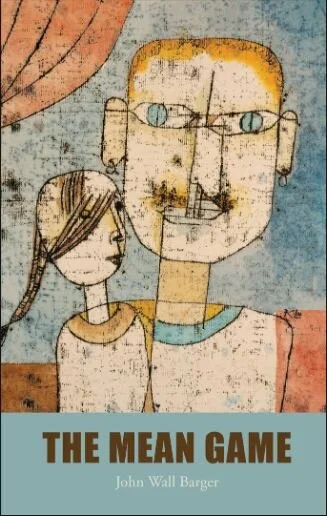
Review of John Wall Barger's The Mean Game

barger.JPG

The Mean Game by John Wall Barger

Palimpsest Press

$18.95

Click HERE to buy.

Reviewed by Chris Kaiser


In The Mean Game, John Wall Barger holds up a courageous mirror to nature. We don’t get a Disney-fied version of life. Rather we get the requisite amount of joy and sadness, of humor and violence. Barger has a deft touch with language, using it to produce an array of emotional responses. That’s not to say his poems lack intellectual heft. They don’t. But he leaves it up to the reader to decide how much the poems will be interpreted as intellectual exercises and how much they will be regarded as emotional journeys.

While he seems intent on making the reader go though something in the theater of their mind, he also seems resolved not to want to generate any particular meaning or lesson. For this reason, readers should be aware of sudden shifts in the poetic narrative.  

Take the poem “The Problem with Love,” in which a boy inherits his dead brother’s pet tarantula. His mother asks if he is “fucking man enough” to take care of the spider. The boy says he is. Barger teases us with normalcy, almost as if this poem is a meditation on adolescence, on growing up. The boy cares for his new pet, feeds it and tells it stories. But after a bad dream, he

woke in the dark, found Ma’s hair scissors,
reached into the spider’s house
& cut off a leg.

This sharp turn of events continues spiraling out of control, as the boy cuts off all the legs—twice—until they do not grow back. The spider

                                    sat in her house,
gray, hissing like a punctured
basketball.        

The reader may still be tempted to interpret this poem as a commentary on growing up, especially when the boy sacrifices the spider to ants, as if giving up his old self. But the reader has to be careful not to get too invested in having the poems be didactic. They may start out as if there is a lesson to be learned, but they then become something else, more thorny and complicated, like life.

In this particular poem, we may have to go back to the title—“The Problem with Love”— for a clue of Barger’s intent. A common theme in this book is how ineffectual love can be, how love on its own doesn’t necessarily solve problems. The boy’s mother spends her time watching TV, leaving him on his own. After the legless spider is devoured by ants, the boy

hosed down the fish tank.
It took ten minutes to scrub it
spotless, so the sun
really shone through the glass.

Is Barger hinting that the problem with love is that it kills, and what it kills can be scrubbed clean and forgotten in the glinting sun? It could be, but this is one of the defining characteristics of Barger’s poetry: We intuit there’s a lesson to be learned but we’re not quite sure what it is. Barger is a wonderful tightrope artist. He toes the line between darkness and light, between illusion and reality.

“The Bureaucrats” is an example of this tightrope act, and it also contains my favorite opening line: “We never should have crossbred the bureaucrats with office supplies.” At first, the crossbred bureaucrats are valued for their interesting feats, “With microchip eyes, they send emails by winking, With opposable big toes they operate four staplers at once.” But they are being held against their will and escape. In the wild, they undergo a transformation and surreptitiously return. Barger writes, “One day at the mall there was a bureaucrat chewing a cheeseburger.” No one knows how or when they came back or how they took control. He then writes, “And just like that, without fanfare, the bureaucrats were in charge.” The poem could be read as a modern-day cautionary tale. But instead of The Office meets The Lion King, we get Big Brother meets Hannibal Lector. As in all bureaucracies, there are forms to fill out and penalties for mistakes. But in Barger’s world, the bureaucrats “wear our scalps as purses. Our spleens, they say, are delicacies. In broad daylight, I come across three bureaucrats crouched over a body in the street, feasting on it like starving boars. Leaving no waste.”

And so ends the poem, balancing whimsy and atrocity. But Barger’s narrators rarely have use for such labels. No, Barger is a skilled linguist and the moralizing, if any, takes place within the mind of the reader.

There’s a wonderful imaginative freedom in reading Barger’s poems. The language, for example, is often archaic or antiquated, adding to the poems’ mystique. In the opening poem, “Urgent Message from the Captain of the Unicorn Hunters,” the narrator says of the unicorns, “Enough have they tholed.” Thole can be found in Beowulf. It is an Anglo-Saxon word meaning to suffer in silence, without complaint. It is the perfect word to use here because the narrator is asking his listeners to “release” the unicorns who have done no wrong,

Those sealed in your attics. Those chained in our barns. Those on the nightmare yokes.
Those heads on your walls. This is our fault.

Most of the language in The Mean Game is simple and straightforward, even if the ideas and images are complex and layered. On occasion, like with “thole”, Barger sends the reader to the dictionary. In the “Last Book of the Last Library on Earth,” the narrator recounts:

 A heavy iron volume burst out
a stained glass window
to the stones at our feet
A scholar plunged after.
Our brothers of the light guns
& clear shields
spattlecocked him.

Spattlecock is an old Irish cooking term from the 1700s, which means to remove the backbone, generally of fowl, for easier grilling. The use of the word adds to the ancient feel of the poem, which also contains one of Barger’s many brilliant poetic descriptions: “I staggered away / in the kiln of dusk clutching it”.

Another poignant description is this one: “Her body held his thunder / the way language holds a flower.” This occurs in the poem “A Scornful Image or Monstrus Shape of a Wondrous Strange Fygure…” (the full title is much, much longer).

In “Tale of the Boy and the Horse Head,” one of the darker poems in the collection, Barger wonderfully captures the morning hue with this line: “Below, in the castiron dawn….”

Finally, in “The Fathers of Daisy Gertrude,” Barger’s deft poetic touch is on display when he tells us:

She slept
under a flowering tree
beside her scream
which remained quiet.

These are just a few of the many examples of how Barger can mesmerize us with his language. We are already in full throttle mode reading these works, a feat that the poet accomplishes, in part, by not using stanza breaks. Barger told me that while writing this book he was influenced by the poet James Tate who, in his later work, didn’t use stanza breaks. He says,

One reason for stanza breaks is to give the reader a little pause, a breather, to collect their thoughts. By not giving stanza breaks, Tate doesn’t allow the reader to rest and possibly break the spell. I was trying for a similar effect in these poems, to hold the reader, to grip them close for the time of the poem, so that there would be no break to the tension until the poem was over.

Barger was born in New York City but grew up in Halifax, Nova Scotia. He’s lived in various places around the world including India, Finland, Greece, and Hong Kong, and now resides in West Philadelphia. He teaches at the University of the Arts and La Salle University. The Mean Game is his fourth full-length poetry book, and his artistic maturity shows.

The Mean Game is a book that embraces opposites: joy and sadness, humor and violence, animals and humans, myth and matter. Barger’s poetic muse gravitates towards myth. Myths aren’t afraid to tackle the difficult subjects, to use violence and death as teachers. We are under a certain illusion that our happiness—our marriages, our jobs, our friendships—will last forever. Barger’s poems do not harbor that illusion. They disrupt our normal expectation, and do so with exquisite poetic skills.

I’ll close with these lines from the last poem in the collection “This This is the End.” They portend new things to come, hopefully also from this author:

And when and when the last bird shuts its eyes
And the flesh of the last whale

Drifts like pollen in turquoise ink
And dust devils are lords of the squares
And trees reclaim the stairs
Still the stars glister like sparklers
Aloft in the hand of a girl
Still the earth our grave hurdles with grace in the dark


kaiser new.JPG

Chris Kaiser’s poetry was published in Eastern Iowa Review, Better Than Starbucks, and The Scriblerus. It appeared in Action Moves People United, a music and spoken word project partnered with the United Nations, as well as in the DaVinci Art Alliance’s Artist, Reader, Writer exhibit, which pairs visual art with the written word. He’s won awards for journalism and erotic writing, holds an MA in theatre, and lives in suburban Philadelphia.

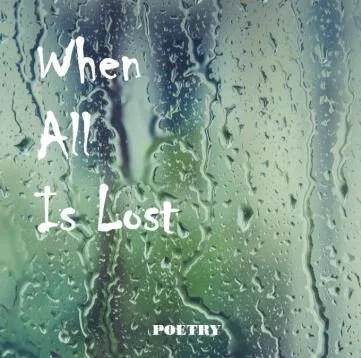
Review of Brandon Blake's When All Is Lost

Like a successful surgical procedure, Blake’s work may hurt at first, but it can also be a first step towards healing, a new state of emotional wellness.
Blake.JPG

When All Is Lost by Brandon Blake

Self-published $5.00

Click Here to purchase a copy

Reviewed by Sean Hanrahan


Some poets find their voice in, and respond to, historic and cataclysmic times or events. Other poets find their voice in, and respond to, the precise, poetic details to be found in everyday life. Brandon Blake’s newest, self-published chapbook, When All Is Lost, offers the reader nuanced and insightful poems that speak to the specific details of the narrator’s post-breakup existence as well as gross injustices occurring in Philadelphia. It is a slim collection (13 pages), but this work contains multitudes and has lingered in my mind longer than its length may immediately suggest.

In his poem, “The Day After,” Blake’s narrator describes a first thought in the first morning after a breakup:

Switching the alarm off
Before it detonates &
Interrupts melancholy states.

He continues to expand upon the emptiness of daily rituals without his partner, without someone to snuggle or shower with—

The shower’s heat doesn’t hold so well
This morning.

His commute has even changed and “lost its vibrancy.” This poem provides the reader with commandingly specific details that the narrator’s heartache becomes palpable, corporeal. The reader, then, is led to recall the details, the rawness of their own dissolved relationships. It is a testament to Blake’s wordsmith skills that he grants himself poetic space to express an intensity of feeling and grants readers the space to work towards their own catharses. Like a successful surgical procedure, Blake’s work may hurt at first, but it can also be a first step towards healing, a new state of emotional wellness.

Blake’s narrator uses his hobbies, as we all do, to distract from his pain, explored in the complex and devastating poem, “My Addiction with Origami.”

I found my fix
deep within the folds as
paper cuts and calloused fingers
provided needed distraction

He finds a place “to tuck away pride and ego” in his folding. He cannot totally escape from his current emotional state as his origami attempts begin to resemble his relationship. This poem resounds with the truth that art can be a way to mitigate our pain, but it is also the place where we confront it. I have rarely found a poem that expresses this fact with as much clarity and beauty as I have found in this poem, my favorite in this collection.

Blake ends this powerful chapbook with poems that move beyond the personal and enter the Philadelphia political arena. With the poem, “Hey Yo, Adriane,” he invokes the cinematic Rocky legend to relay the experience of a woman with a

Scrawny handwritten sign announcing
“Too ugly to prostitute.”

Whether through astute observation, intuitive imagination, or both, Blake gives a voice to this “Adriane to anyone’s Rocky,” a woman that many city-dwellers would choose to ignore. If only this poem was as well-known as the Rocky statue, we could see real change in Philadelphian society.

As a native Philadelphian, Blake also calls for us to remember the MOVE bombing of 1985 in the powerful closing poem, “Attention MOVE…This is America.” Blake paints a clear picture of that morning of devastation with the lines:

Eastern light
accentuating adrenaline-fueled veins
dissipating
in sweat behind blue collars
barely restraining the hounds of justice.

The tension and the sorrow build as all local readers know how this poem must end, although in a better and more humane world the MOVE bombing would not have taken place. But in 1985 and in America, it unfortunately did. Blake closes this vital chapbook with the image of,

dreadlocked cherubs
breaking free from the licks of fiery shackles
escaping Puritan purgatory
vanishing in the Philly skyline.

No poet, or pugilist for that matter, packs a punch like Brandon Blake.


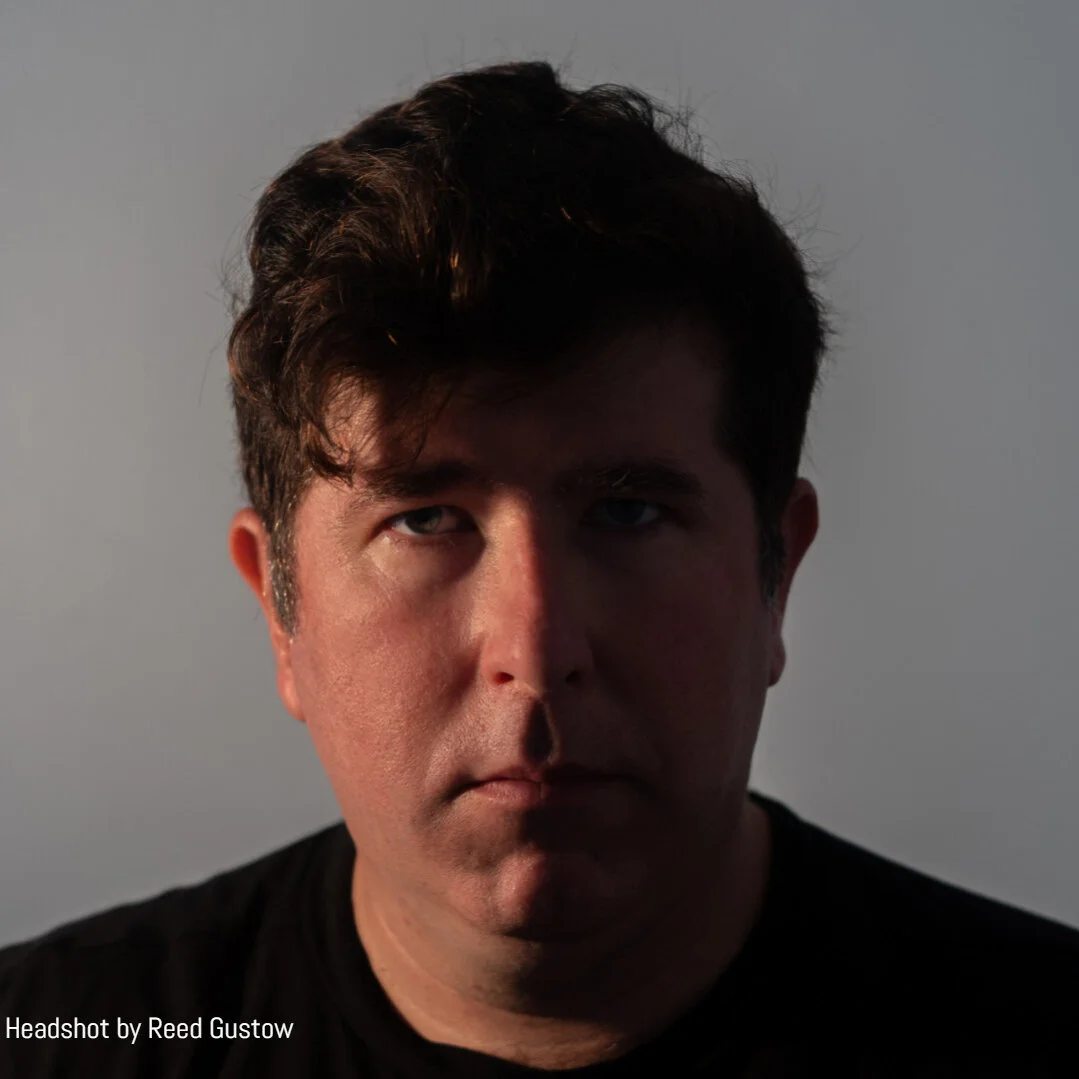
Hanrahan headshot.jpg

Sean Hanrahan is a Philadelphian poet originally hailing from Dale City, Virginia. He is the author of the full-length collection Safer Behind Popcorn (2019 Cajun Mutt Press) and the chapbooks Hardened Eyes on the Scan (2018 Moonstone Press) and Gay Cake (2020 Toho). He is currently at work on several literary projects as well as teaching a chapbook class this spring. He currently serves on the Moonstone Press Editorial Board, as head poetry editor for Toho, and workshop instructor for Green Street Poetry.


Local Lyrics featuring Stephanie Cawley

Local Lyrics hosted by John Wojtowicz appears on the 3rd Monday of each month. In it, John features the work and musings of a local poet.


“I’m finding myself most wanting the company of many poets I already know and who, in ordinary times, it would be no miracle to spend time with … I’d honestly trade a chance to lay in a meadow with Emily Dickinson for it.”

Stephanie Cawley

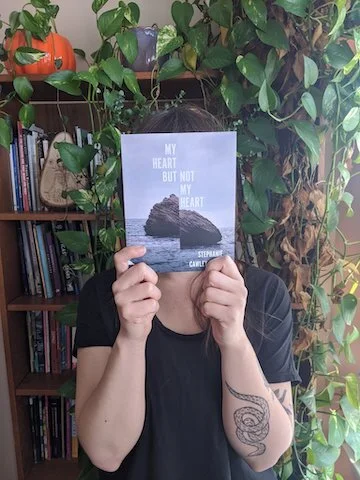
from My Heart But Not My Heart

Does your mouth go wreath
when you want warmth?
Do you say fallen instead of
fallow? Does your tongue get stuck
in the gap between is and was?
There is an actual shrinking.
List all the animals you can.
Echo back these fifteen words.
You are a thin glass of water.
You are a cold wind and a field.
Don’t make them a story.

Q and A

How would you describe your poetic aesthetic?

I aspire to being a poet who is not loyal to any singular aesthetic, style, form, or mode of writing. I hope to continually reinvent myself, to find the forms and modes that a given subject or project requires and to always remain interested in trying something new with my work. I guess that is a kind of aesthetic or tendency in and of itself, though! And all that said, I recognize that I’ve been pretty dedicated to the prose poem and to poetry/prose hybrid forms for quite some time now. My first book My Heart But Not My Heart is an extended sequence that is mostly prose; I have a chapbook A Wilderness that is almost all prose poems; and my second book Animal Mineral will contain prose poems, a kind of lyric essay, and a long poem that rewrites a short story by Clarice Lispector, in addition to some standalone poems.


If you could spend the afternoon with one poet living or dead, who would it be and how would you spend your afternoon?

I haven’t spent an afternoon with any person other than my partner in about two months now, so I’m finding myself most wanting the company of many poets I already know and who, in ordinary times, it would be no miracle to spend time with. I’d love to spend an afternoon with my poet friends, maybe writing together, or reading poems to each other, or maybe just sitting outside having a drink. Right now, I’d honestly trade a chance to lay in a meadow with Emily Dickinson for it.


Is there anything unique about your process? Do you have any advice for writers struggling to find their voice?

I don’t know if it’s unique, but my writing process relies a lot on intuition. I generate work by dropping in to a space where I’m as unconscious about what’s happening on the page as possible, freewriting, writing while looking out the window, sometimes incorporating elements of chance or outside inspiration (eavesdropping, observation, grabbing bits of text from another book, drawing a tarot card). Then I come back later (sometimes much later) and read and shape and refine and rearrange and remix and apply structure. I am trying not to think of that second step as “cleaning up,” but as a process of reflecting on and bringing more intention into a work.


In your new book, My Heart But Not My Heart, you write about your experience with grief. Did you have a specific strategy when traversing the line between the personal and universal?

Writing the book began with a need to document and make space for my personal experiences of grief in the aftermath of my dad’s sudden death. It feels like American culture is pretty uncomfortable with death and with real grief, so writing this book became a way to make space for thoughts and feelings that felt unspeakable and unbearable in my daily life. I don’t really believe in universality or in striving towards it, but I did find myself curious about how my individual experiences connected to others’ experiences and connected to other bodies of knowledge. I wanted to try to understand what was happening to me, so I found myself turning to philosophy, neuroscience, and other cultural texts about grief and depression, which then made their way into the writing.


In this book, you seamlessly move between prose and poetry. Can you tell us a little about the decision not to box yourself into one form?

The book began with the sections that are in prose, which I started writing around the one year mark after my dad died. For that first year after he died, I was in graduate school, and I muscled through continuing to write kind of musical, lyrical poems, but it felt like I was going through the motions. Then, eventually, it felt like I couldn’t bear to write like that at all anymore, like I couldn’t approach my actual experiences with that kind of writing. So, after a while of not really writing at all, I started writing into a Word document in prose. I didn’t think what I was doing there was “real writing,” writing that would become anything or that anyone else would ever read, but it was the first time I felt able to actually arrive on the page. I wrote into that document every day for about a month, and then showed a bit of it to my teacher and mentor Dawn Lundy Martin who told me this was my book and that I had to keep writing it.

When I began to shape the book manuscript, I knew that by then I did also have some more “poem”-type pieces that were in conversation with the prose, so I spent a long time playing with order and structure before arriving at a kind of architecture that holds all these pieces together. It felt right, for a book about an experience of grief, for there to be aspects of the form that felt disorienting (the shifts between poetry and prose, the fragmentation, the pieces that occupy different parts of the page) and aspects that evoked an enduring sameness (the long prose sequences).


Where can readers find more of your work? Where can we buy your books?

You can get My Heart But Not My Heart right from my publisher Slope Editions (slopeeditions.org), from Small Press Distribution (spdbooks.org), or from Bookshop.org. You can also buy it from Amazon, but you shouldn’t! Even setting aside Amazon’s horrific labor practices, for small press books like mine, if you buy from the press or from indie retailers, more of your dollars will go back to support the press, which runs on a shoestring budget and volunteer labor. I also have a chapbook A Wilderness which you can get from Gazing Grain Press (gazinggrainpress.com). I also have work in various print and online journals which you can find links to on my website stephaniecawley.com.

Cawley.jpg

Stephanie Cawley is a poet from southern New Jersey and the Director of Murphy Writing of Stockton University. She is the author of My Heart But Not My Heart, which won the Slope Book Prize chosen by Solmaz Sharif, and the chapbook A Wilderness from Gazing Grain Press. Her poems and other writing appear in DIAGRAMThe FanzineTYPOThe Boston Review, and West Branch, among other places. Her next book Animal Mineral will be out from YesYes Books in 2022. Learn more at stephaniecawley.com.


wojto.jpg

Catfish” John Wojtowicz grew up working on his family’s azalea and rhododendron nursery in the backwoods of what Ginsberg dubbed “nowhere Zen New Jersey.” Currently, he serves his community as a licensed social worker and adjunct professor.  He has been featured in the Philadelphia based Moonstone Poetry series, West-Chester based Livin’ on Luck series, and Rowan University’s Writer’s Roundtable on 89.7 WGLS-FM. Catfish John has been nominated 3x for the Pushcart Prize. He has been a workshop facilitator for Stockton University’s Tour of Poetry at the Otto Bruyns Public Library of Northfield and will be facilitating a haiku workshop at Beardfest Arts & Music Festival at the end of August. Recent publications include: Jelly Bucket, Tule Review, The Patterson Literary Review, Glassworks, Driftwood, Constellations, The Poeming Pigeon, and Schuylkill Valley Journal. Find out more at: www.catfishjohnpoetry.com

In Their Words - An Interview with Steve Delia

This month, we go all the way back to 2017, when Mike Cohen interviewed his partner in crime, Steve Delia. In this section of the interview they talk about the importance of performance in poetry, as well as the importance of identifying yourself as a poet. Click the image for the interview.

For the full interview, along with others, click here to check out Mike Cohen’s YouTube channel.


Delia+and+Cohen.jpg

Steve Delia and Mike Cohen have worked collaboratively and independently as poets and supporters of the arts in the Greater Philadelphia area. Mike Cohen helps to run the Poetry Aloud and Alive series at the Big Blue Marble Bookstore, and has had his fingers in many poetic ventures over the years. Steve Delia is the author of 6 chapbooks of poetry, and has read in a variety of venues, including the Philadelphia Writers Conference and on WXPN. Steve and Mike have also appeared throughout the Philadelphia area as the Dueling Poets.

Review of Ann E. Michael's Barefoot Girls

The book is filled with long roads, small towns, big dreams, self doubt and intense desires.
Michael.jpg

Barefoot Girls by Ann E. Michael

Prolific Press

$8.95

Click HERE to purchase a copy


Reviewed by Phil Dykhouse


If you pay the price

she’ll let you deep inside

but there’s a secret garden she hides.

Bruce Springsteen, “Secret Garden


In the dedication that opens Ann E. Michael’s Barefoot Girls, she professes that her chapbook is “Indebted to the music of Bruce Springsteen',” and as you begin to delve into the 24 poems of the collection, it’s hard not to notice. The book is filled with long roads, small towns, big dreams, self doubt and intense desires. However, even with its poetry being so closely inspired by one music’s greatest storytellers, Barefoot Girls excels in carving its own unique path through it’s tales of being young and growing up in South Jersey. 

 With its first few poems, Barefoot Girls begins building both its physical and emotional landscape. The streets are empty and boredom is commonplace. Like most teenagers, the subjects in these poems are quite aware of their unfulfilling positions in life. There’s an angst here that comes across as completely natural. 

“You sought somewhere sultry and new to you: winding, dense. Dangerous”
from “Coastal Plains”


The streets were dead ends mostly, as the tracks
followed the feeder creek, and there was nothing
to get to on the other side except
trouble…

from “Dares”

A little further into the book the poems find the girls stepping out into the world beyond their monotonous surroundings. It’s here that they begin to search for who they are, who they want to be. You’ll find them discovering their love of music from a certain rock star and contending with puberty at the roller skating rink.  

“Some boy from north Jersey strummed our stories on his guitar…I would never have seen how the music sustains them, those dancers and lovers carried off by the back beat…”
from “Rock Concerts”

...me in my Keds with an extra 50 cents to rent the largest women’s size or a boys’ pair…you and I at fourteen, putting our whole selves in.”
from “Roller Rink”

As you progress further, in what seems so true to life, we find the girls suddenly coming face to face with self perception. Ann does an amazing job subtly introducing it into Barefoot Girls. When I arrived at this part of the book, it came back to me how quickly we as children are thrust in such a confusing time. Competition with each other begins to replace the more innocent relationships we’ve known. We begin to not only question others, but also ourselves. 

“...she watches the boys elbow one another trying to pretend they’re not out to impress…”
from “Barefoot Girl”

“Something about them spoke of competition and staying tough. Something about them said the ones who stay benched lose.”
from “Bleacher Season”

After that, love and sex begin to play an important role in the book. For the first time in their lives, the girls are experiencing desire from within themselves, as well as boys. It’s in these poems they are confronted with the repercussions of lust, shame, confusion, and especially pregnancy.   

“Love was desire mostly, we’d no other name for it, not at 15.”
from “Boys”

“She felt his heart beat in her ribs, a tunnel through her girlhood.”
from “Little Joanie”

“...your sister’s confession she was carrying the child of that boy she’d been caught screwing in
the high school auditorium back row…”
from “Normal Day”

Towards the end of the book, you’ll find that the poems have evolved into a slightly more reflective tone. The speaker is a little older. She’s experienced things that have changed her. She seems to be looking forward while still having one foot stuck in the past. It's quite similar to the angst that we come upon in the beginning of the book. It's as if she sees that after all her and her friends have been through, they’re still stuck where they were when it started.

“We were young and easily influenced, convinced the future was something constructed around us…”
from “Building for Us”

“She’s young but she’s sure she’s left girlhood behind on the swingset…”
from “Against Whatever Holds You Down-”


As I finished Barefoot Girls, I found that Ann’s ability to frame a story with a voice that isn’t at the center of it is one of the book’s highlights. It allows you to feel as though you are part of this group of friends. You feel as though you are with them in their intimate moments. Interestingly enough, I also came of age in South Jersey, so I am quite familiar with its trappings. I’ve experienced many of the same situations and feelings that are the focus of most of these poems. I must say that as a male I was a little intimidated to relive them through a female's perspective. I felt as if I was looking in on something that had been hidden from me my entire life. However, through its layers of honest and evolving poetry, Barefoot Girls reveals itself to be so encompassingly human that the differences in gender become only part of the story instead of its whole. It sings like a song you’re familiar with, even if you’re hearing it for the first time. A song you’ll want to listen to over and over again. 


Phil - headshot.jpg

Philip Dykhouse lives in Philadelphia. His chapbook Bury Me Here was published and released by Toho Publishing in early 2020. His work has appeared in Toho Journal, Moonstone Press, everseradio.com, and Spiral Poetry. He was the featured reader for the Dead Bards of Philadelphia at the 2018 Philadelphia Poetry Festival.

POeT SHOTS - "Ex Basketball Player" by John Updike

POeT SHOTS is a monthly series published on the first Monday of the month. It features work by established writers followed by commentary and insight by Ray Greenblatt. POeT SHOTS #7, Series C


EX-BASKETBALL PLAYER

Pearl Avenue runs past the high-school lot,
Bends with the trolley tracks, and stops, cut off
Before it has a chance to go two blocks,
At Colonel McComsky Plaza. Berth’s Garage
Is on the corner facing west, and there,
Most days, you’ll find Flick Webb, who helps Berth out.

Flick stands tall among the idiot pumps—
Five on a side, the old bubble-head style,
Their rubber elbows hanging loose and low.
One’s nostrils are two S’s, and his eyes
An E and O. And one is squat, without
A head at all—more of a football type.

Once Flick played for the high-school team, the Wizards.
He was good: in fact, the best. In ‘46
He bucketed three hundred ninety points,
A county record still. The ball loved Flick.
I saw him rack up thirty-eight or forty
In one home game. His hands were like wild birds.

He never learned a trade., he just sells gas,
Checks oil, and changes flats. Once in a while,
As a gag, he dribbles an inner tube,
But most of us remember anyway.
His hands are fine and nervous on the lug wrench.
It makes no difference to the lug wrench, though.

Off work, he hangs around Mae’s Luncheonette.
Grease-gray and kind of coiled, he plays pinball,
Smokes those thin cigars, nurses lemon phosphates.
Flick seldom says a word to Mae, just nods
Beyond her face toward bright applauding tiers
Of Necco Wafers, Nibs, and Juju Beads.


Master of fiction and essay Updike has brought Rabbit into a poem disguised as Flick, also a great ex-basketball player: “The ball loved Flick.” “His hands were like wild birds.” “Grease-gray and kind of coiled.” Even the gas pumps where he worked were like him: “Rubber elbows hanging loose and low.”


greenblatt.jpeg

Ray Greenblatt has been a poet for forty years and an English teacher longer than that. He was an editor of General Eclectic, a board member of the Philadelphia Writers Conference, and is presently on the staff of the Schuylkill Valley Journal. He has won the Full Moon Poetry Contest, the Mad Poets Annual Contest, and twice won the Anthony Byrne Annual Contest for Irish Poetry sponsored by The Irish Edition. His poetry has been translated into Gaelic, Polish, Greek and Japanese.

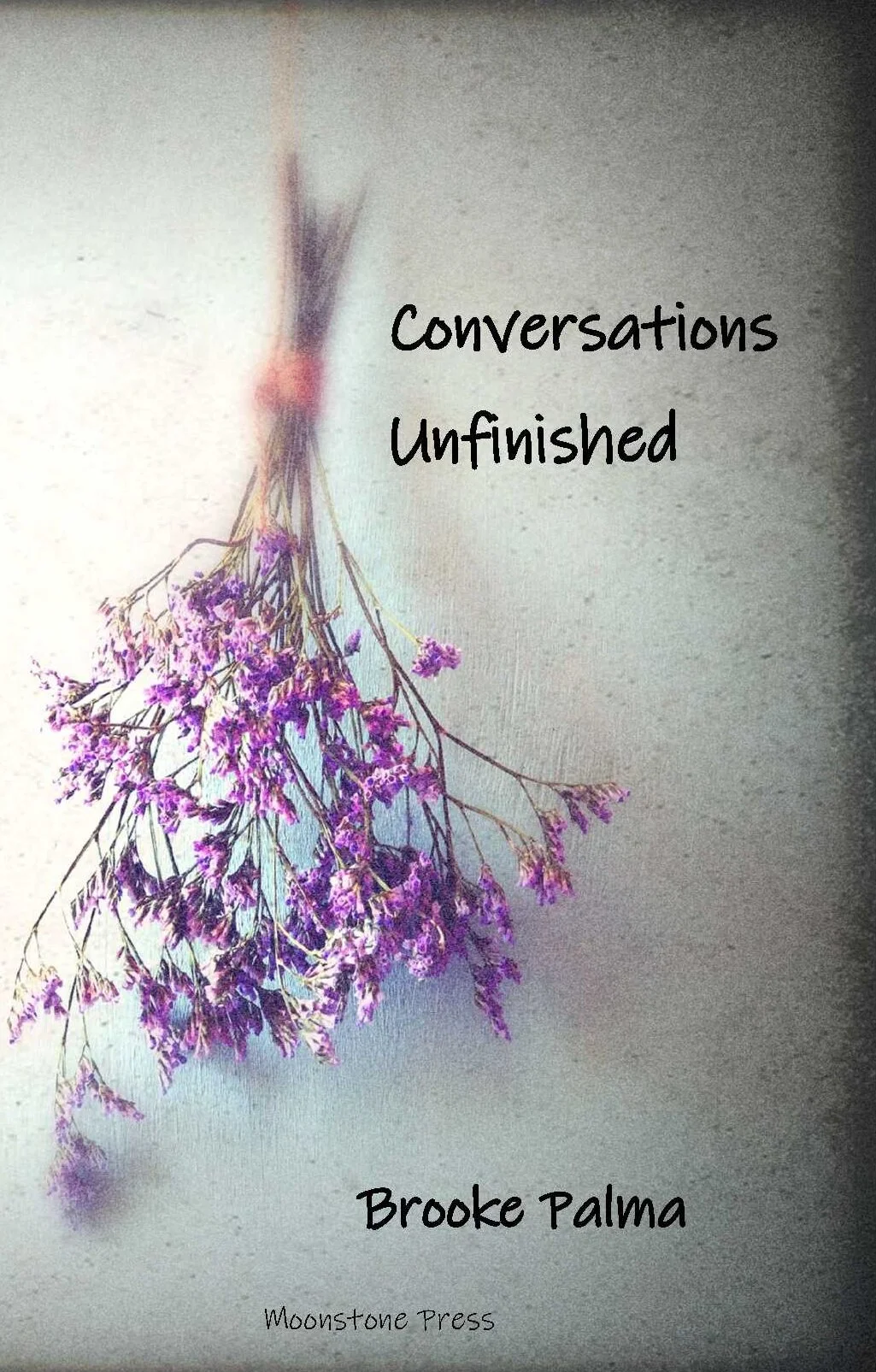
Review of Brooke Palma's Conversations Unfinished

The poet expertly navigates around memories, the dead, and ghosts, but she also has something to say about the present.
cover the brooke.jpg

Conversations Unfinished by Brooke Palma

Moonstone Press

$11.00 (includes shipping)

  • Click Here to buy a copy!

Reviewed by Chris Kaiser

In Conversations Unfinished, a moving and poignant first book of poetry, Brooke Palma grabs our heartstrings from the outset and refuses to let go. The opening poem, “Apology for a Broken Ending,” begins like this:

I’m sorry I can’t tell the end of your story.
It isn’t fair that I’m leaving it tattered
and unfinished.

There is a psychic weight the poet is carrying, and she asks us, the readers, to help her carry it. And we are happy to oblige because the poems gently invite us into this world of loss.

Palma’s language is straightforward, even if inadequate — in her mind — to give true expression to her grief. In the same opening poem, she laments:

 I’ll drop these words
like stones in the twilight hour
in the Arno river…

We slowly learn little bits of the background narrative as each poem unfolds. Someone close to the poet has died…but the death was kept from her…it was a woman…an immigrant…from Italy. Each poem in the first half of the book delivers an emotional payoff while also keeping us at bay.

It’s not until the sixth poem, “Requiem,” that we learn Palma is longing for her grandmother, her nonna. “Requiem” begins as the retelling of a dream, but imperceptibly morphs into something straddling memories and reality. Palma herself admits the difficulty of holding onto memories of her nonna, afraid they will turn “moldy” like cut flowers “in the humid, Sicilian air.”

The poet expertly navigates around memories, the dead, and ghosts, but she also has something to say about the present. The poem “Consigli (Advice)” is a font of practical advice passed down to the poet from her nonna. For example: “men are hard; you’ll want one, trust me, but don’t marry anyone from Southern Italy…”, “if you have female troubles, brew chamomile tea…”, and “don’t fight with your mother; she’s always been this way.”

The connections to her nonna that Palma shares include with flowers, food, and various stages of womanhood. For example, in the poem “Eggplant,” she adroitly combines food and her sense of self.

Nature’s sensuality lives
in the eggplant,
whose fluid curves remind me of my own shape.

The poem is grounded by Palma’s memories of cooking eggplant with her grandmother for Sunday dinner.

Nonna was old school and perhaps wouldn’t have approved of these family secrets being aired out, as Palma told me in an interview. And it wasn’t always so easy for the poet to bare her soul.

One of her inspirations while writing the book was Bruce Springsteen’s Broadway show, specifically, his ability to tell the truth, in vignettes, without telling the whole story.  She also was inspired by local poet Shan-Tay Mercedes Watson’s book Audacity, which often explores shame, things that are covered up. “When I read Audacity, I knew I needed to tell my story,” Palma said. “We’ve kept these things hidden for too long.”

The collection of poems in Conversations Unfinished is best read in one sitting. Afterward, each poem could then be read individually, and at one’s leisure.

The poems are made all the more poignant because of the way Palma’s grandmother disappeared from her life. We sense the poet is not yet finished writing about her nonna. In the concluding poem “Translation,” she writes:

I will pull your story from the ether
to end the silence.

One can only hope our future silence will be broken by more poems from this talented writer.


Kaiser pic 2.jpeg

Chris Kaiser’s poetry explores many topics including familial bonds, aging, and existential angst. It has appeared or is forthcoming in Eastern Iowa Review, Better Than Starbucks, and The Scriblerus. It also was featured in Action Moves People United, a music and spoken word project partnered with the United Nations. He’s won awards for journalism and erotic writing, holds an MA in theatre, and lives in suburban Philadelphia.

In Their Words - an Interview with David Kozinski

In Their Words is a monthly feature where Steve Delia and Mike Cohen interview poets from the Mad Poets Society and beyond to get their perspective on art, poetry, and life.

Back in 2018, Steve, Mike, and Connie sat down to interview poet and visual artist David Kozinski. They talk about ekphrastic poetry, abstract art, and inspiration. Click picture to view.

For the full interview go to Mike Cohen’s YouTube channel by clicking here.


koz.jpg

David P. Kozinski was the 2018 Delaware Division of the Arts Established Professional Poetry Fellow. Publications include Tripping Over Memorial Day (Kelsay Books) and Loopholes (Broadkill Press). Kozinski was Expressive Path’s 2018 Mentor of the Year and serves on the board of the Manayunk-Roxborough Art Center and the editorial board of Philadelphia Stories. He is Art Editor of the Schuylkill Valley Journal.


Delia and Cohen.jpg

Steve Delia and Mike Cohen have worked collaboratively and independently as poets and supporters of the arts in the Greater Philadelphia area. Mike Cohen helps to run the Poetry Aloud and Alive series at the Big Blue Marble Bookstore, and has had his fingers in many poetic ventures over the years. Steve Delia is the author of 6 chapbooks of poetry, and has read in a variety of venues, including the Philadelphia Writers Conference and on WXPN. Steve and Mike have also appeared throughout the Philadelphia area as the Dueling Poets.

POeT SHOTS - 'AT THE CORNER OF OIL AND BEEF' by John Reibetanz

POeT SHOTS is a monthly series published on the first Monday of the month. It features work by established writers followed by commentary and insight by Ray Greenblatt

POeT SHOTS #6, Series C

AT THE CORNER OF OIL AND BEEF
Sturgid Motorcycle Rally, Sturgis, South Dakota

More than magenta tattoos    that flicker action films of flame-snorting dragons or sea serpents across once muscled chests    shoulders    forearms    more than massive rhinestone

 encrusted buckles    studding barrel-waisted demons with ersatz Mayan bling     their headgear blazes longings to return to a more fabled age    Viking helmets

some horned    some winged with stripes or lightning bolts    golden clasped bandanas    starred midnight or blood red silks that might have fringed the brow of Blackbeard or Long John Silver    and most

 of all    the towering broad-brimmed Stetsons    mesas on the move    their shadows sweeping once-vast plains under wheeled riders’ great horsepowered mounts    mythology of man

 versus steer    as potent as the frescoed bull-leapers on Cretan walls    and here on Sturgis Main Street    near One- Eyed Jack’s Saloon    where curbed Electra Glides and Road Kings

idle under Texas Beef Brisket    Deep Fried Sirloin Tips    and ribs ribs ribs    mingling fumes    where no one reckons the sixteen pounds of grain gone up in smoke for each pound

 of meat    or the ninety tons of antique plant matter hecatombed in every gallon of gas    I long to satisfy these cowboys’ longings a million times o-

 ver    send them back way beyond Minoan rodeos beyond the first taming of cattle    the first sowing of grain that fed them    beyond the first rooted earthlife

 to pirate-free ancient seas beneath the plains    before titanic heat gods spirited oil    from the micro- scopic remains of floating protoplankton    before

 each diatom and dinoflagellate burned sunshine to carbon    send these steersmen back    hands whisked from throttle- grips    haunches from hand-tooled leather saddles    back beyond

 the blinding glitter of their gas-fed longhorns’ chrome flanks in mythic ascension    to untracked starry passes where light glides    flameless    smokeless    tinged only with promise

A flood of imagery! From “protoplankton,” “diatom,” dinoflagellate,” to “Texas Beef Brisket  Deep Fried Sirloin/Tips.” What do some people want: “longings/to return to a more fabled age.” What does the poet want for them: “Send these steersmen back [...] to untracked starry passes/where light glides     flameless smokeless     tinged only with promise.”

greenblatt.jpeg

Ray Greenblatt has been a poet for forty years and an English teacher longer than that. He was an editor of General Eclectic, a board member of the Philadelphia Writers Conference, and is presently on the staff of the Schuylkill Valley Journal. He has won the Full Moon Poetry Contest, the Mad Poets Annual Contest, and twice won the Anthony Byrne Annual Contest for Irish Poetry sponsored by The Irish Edition. His poetry has been translated into Gaelic, Polish, Greek and Japanese.

Review of Sam Fischer's Short Cycles

Sam’s ability to focus a sense of balance within [the book’s] themes is truly impressive.
Fischer.jpg

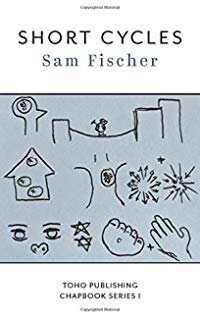
Short Cycles by Sam Fischer

Toho Publishing $9.99

Click here to buy a copy now!

Reviewed by Philip Dykhouse

When I read poetry, I’m searching for connection. I long to see myself in its mirror. I want to run my fingers along the seams of what the author is sowing. So, I was quite fortunate when I picked up Sam Fischer’s debut chapbook Short Cycles. It completely drew me into its world with its smart and thoughtful collection of moments, feelings, and observations that band together to create poetry that is both familiar and unique.

Short Cycles is true to its title. The book is broken up into several small chapters, or cycles as you will. These cycles subtly examine such themes as love, death, acceptance, failure, memories, and spirituality, among others. Each cycle has its own title and hand drawn art to accompany it. By separating the poems this way, I found the structure of the book to be one of its greatest strengths.

The first thing I noticed about Short Cycles is its creative use of the physical, non-human world to convey its themes. For example, the cycle “Do Birds Dream of Falling” consists of three short poems that use the lives of birds as a metaphor for our struggles, with lines like,

“It must be hard to always have to move your wings just to stay alive.”

In another cycle, there’s a dog that finds it isn’t fulfilled by finally catching its prey,

…howling for the earth to give them the dream they want to chase again.”

I also found that Sam’s description of colors and shapes plays a major part in building the world that he is trying to show us:

…running his hand through the graying hair of his wife, thinking of the sharp
red memories, and how like ash it is, these moving living lives we touch.”

Notwithstanding, even with its inventive use of nature to outline its language, the undeniable heart of Short Cycles is its breadth of human emotions. With the cycle “Julia”, Sam crafts two narratives of desire that feel all too real. In one poem, a man stares out the window of a trolley, listening to a song that reminds him of a woman,

…the empty center from which we lean away toward raindrops sliding toward headphones nestled in.

With the next piece, a person is transporting bread to someone they proclaim to love and comes to see the similarities between the two,

…we hold each other, warm and thick, with space and nothingness, rising…”

The cycle “David” revolves around the titular David and how he copes with death and depression. In these poems, I find David observing what is happening instead of simply lamenting it.

David let his fingers gently hold each other and watched the sinking white twilight behind the trees. The
same thing must have been happening to the letters on the headstone, which had all but disappeared.”

While the theme of these pieces appear dark, Sam is sure to paint rays of light within them.

Buttoning up he was thankful for not making his body hold wet paper heavy with ink.

When beginning Short Cycles, you are presented with meditations on how complex and sometimes unfair life can be,

There’s a painful narrowness to being held between things.

Still, by the end, there appears to be a steadiness in what it wants you to know,

“…so if you find yourself
alone in the water
know there is a thin cord you tied
keeping what you need close to you
and there is someone coming
who will find you.

That’s what this book does so well. Sam’s ability to focus a sense of balance within its themes is truly impressive. His concise, powerful poetry is beautifully written and well-paced. With every poem, I felt an instant bond. There are lines throughout the book that convey feelings I have never been fully able to express myself. It’s rare to find a voice as fresh and yet, as wise as Sam’s. Much like the cycles of our lives, I’m sure that this book will find its way back to me soon.


Phil - headshot.jpg

Philip Dykhouse lives in Philadelphia. His chapbook Bury Me Here was published and released by Toho Publishing in early 2020. His work has appeared in Toho Journal, Moonstone Press, everseradio.com, and Spiral Poetry. He was the featured reader for the Dead Bards of Philadelphia at the 2018 Philadelphia Poetry Festival.


Poetry Reviews on the Mad Poets Blog!

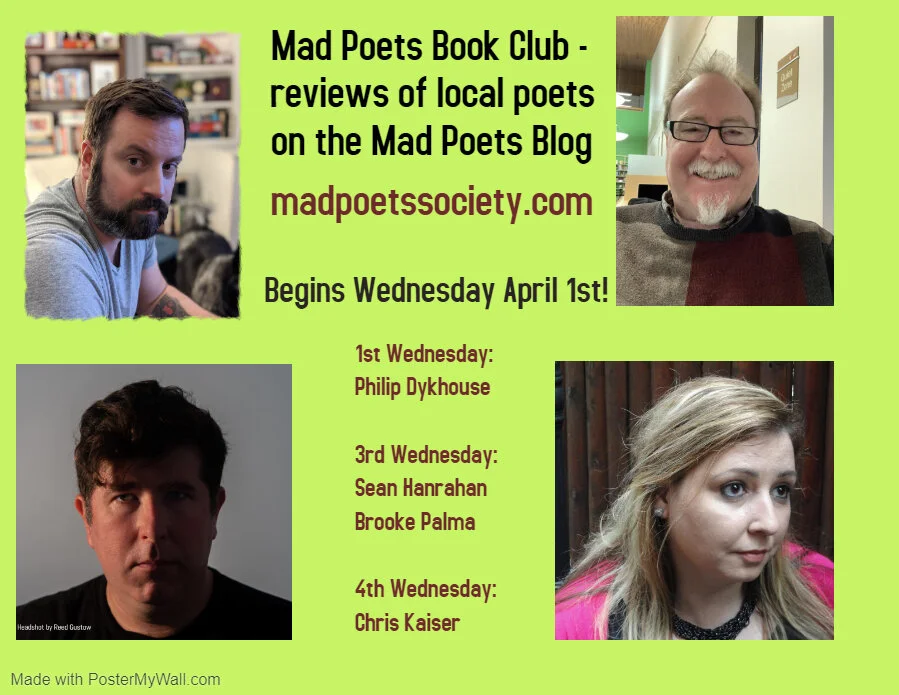
We are proud to announce that, starting in April, the Mad Poets Society Blog is going to introduce a new feature. The Mad Poets Book Club will feature reviews of books and chapbooks by local poets. The reviews will be written by some of the most exciting voices in the Greater Philadelphia Poetry Scene: Philip Dykhouse, Sean Hanrahan, Chris Kaiser, and Brooke Palma.

A new review will go up on the 1st,  3rd, and 4th Wednesday of each month. April 1st will be the first review, where Philip Dykhouse reviews poet Sam Fischer’s collection “Short Cycles”.

See the flyer below for details. Be sure to subscribe to the blog to get notifications about new posts. 

To subscribe to the blog:
1. Click the title of any blog post.
2. At the bottom right of the post, select "subscribe via e-mail."

Mad Poets Book Club flyer.jpg